
A Sydney strata building can look tired long before it actually needs major work. Faded exteriors, marked hallways and peeling trims quickly make a well-managed property feel neglected. Strata Painters can help restore the building’s appearance and protect its surfaces, but the best results come from having a clear painting plan in place before work begins.
When I plan a strata repaint, I look beyond colour. I consider the building’s condition, shared spaces, access, resident traffic, weather, safety, repairs, budget and the final finish. Good Strata Painters bring those details together so the committee can make decisions before the first roller touches a wall.
That is where experienced Strata Painters can help. Instead of treating every apartment block the same way, you can shape the project around its layout, surfaces, exposure and maintenance history. A coastal building, for example, may need a different approach from an inner-city complex with limited external access.
1. Start With a Precise Painting Scope
Your plan needs to say exactly what you want painted. Avoid vague instructions such as “repaint the building”. List each area so your Strata Painters can price the same work you expect.
Break the scope into practical zones:
- External walls and rendered surfaces
- Hallways, stairs and lift lobbies
- Entry doors, frames and handrails
- Garage walls, columns and ceilings
- Eaves, soffits, fascia and selected metalwork
- Bin areas and service corridors
Also record exclusions. That small step can stop disputes when someone assumes the quote covers a door, timber feature or damaged structure that never appeared in the original brief.
2. Inspect the Building Before Choosing Colours
I always start with an inspection. Look for peeling coatings, cracks, bubbling paint, mould, water staining, damaged render and rust. Those problems tell your Strata Painters what preparation and repair work the project may need.
Paint cannot fix a leaking balcony or recurring moisture problem. It simply gives the problem a new shirt. Deal with defects first, especially where water, corrosion or loose surfaces could shorten the life of the new coating.
3. Check Strata Records, Responsibilities and Funding
Before you approve the project, check your strata plan, by-laws, previous meeting minutes and maintenance records. Your Strata Painters need a clear brief, while the committee needs confidence that the work fits the scheme’s responsibilities and budget. The NSW Government explains that owners’ corporations manage common-property maintenance and that the capital works fund can cover common-property repainting. Review the NSW Government guidance on strata repairs and maintenance before the committee finalises the project.
I also recommend checking defect reports, previous warranties and any notes about recurring repairs. You may discover that the best time to repaint a facade also happens to be the best time to address related maintenance.
4. Give Surface Preparation Its Proper Place
Preparation often decides whether the finish still looks sharp months later. Good Strata Painters clean, scrape, sand, fill, seal and prime according to the surface instead of rushing straight to the topcoat.
Rendered walls may need crack repairs and masonry preparation. Metal surfaces can need rust removal and corrosion control. Old painted surfaces may need washing and careful removal of loose material.
I treat preparation as part of the main job, not an afterthought. A cheap quote can quickly become expensive when it leaves essential preparation out.
5. Plan Access Before Work Starts
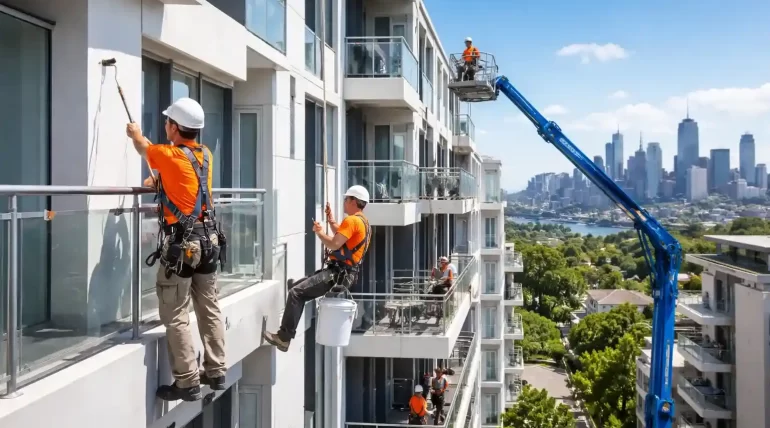
Multi-storey painting can involve scaffolding, elevated work platforms, ladders or controlled roof access. Your Strata Painters should assess how equipment will reach each elevation before you lock in the programme.
Walk the site and note narrow driveways, balconies, gardens, pedestrian paths, garages and neighbouring boundaries. Then plan how crews will move without blocking essential routes.
Protect windows, paving, gardens, vehicles, mail areas and resident belongings. A clean site shows residents that the project has control from day one.
6. Schedule the Project Around Real Sydney Life
A strata building never truly switches off. Residents commute, children move through common areas, deliveries arrive and trades come and go.
For that reason, I prefer staged programmes. Your Strata Painters might complete one wing, stairwell or facade section at a time so the building stays as usable as possible.
Allow for Sydney weather too. Rain, wind and humidity can affect exterior work and drying conditions. A realistic programme leaves room for weather changes instead of promising an unrealistic finish date.
7. Choose Colours and Finishes With a Sample Process
Colour discussions can become surprisingly dramatic in strata meetings. One owner sees warm grey; another sees beige; someone else sees an opportunity for a very brave shade of green.
Make the process simple. Ask your Strata Painters for a small palette, then test samples on the actual building. Natural light, surrounding materials and the building’s architecture can change how a colour looks.
Think about finish as well. High-traffic corridors need durable, cleanable coatings, while exterior surfaces may need products suited to sun and moisture. The right specification matters more than chasing the cheapest tin on the shelf.
8. Put Safety and Resident Communication Into the Plan
Residents do not need a technical lecture, but they do need clear notice. Tell them when work starts, which areas crews will close, how long disruption may last and what they should move.
Your Strata Painters should also work to an organised site plan covering barriers, signage, dust control, overspray protection, equipment placement and emergency access.
I find that early communication prevents a lot of unnecessary tension. People usually handle disruption better when they know what will happen and when normal access should return.
9. Compare Quotes on Value, Not Just the Bottom Line
Ask each contractor to price the same scope. Compare preparation, materials, access, protection, repairs, programme, clean-up and warranty terms.
Your Strata Painters should explain what the price includes instead of giving you a mysterious one-line total. A low quote can look attractive until you realise it excludes scaffolding, extensive preparation or repair allowances.
Also ask about insurance, licensing, supervision and recent strata projects. You want a contractor who can manage people, access and disruption as well as paint.
10. Separate Repairs From Cosmetic Work
Painting can reveal issues you did not notice before. Cracks, stains and corrosion may point to wider maintenance needs.
Create a defects list and rank each item as urgent, necessary or cosmetic. Then decide which work belongs with other trades and which preparation tasks the painter can handle.
This approach can also save money. When you coordinate related work, you may reduce repeated access costs, site disruption and contractor mobilisation.
11. Build a Transparent Budget
A strong plan should show more than one final figure. Your Strata Painters should help you understand labour, materials, access, repairs, protection, waste removal and any specialist work.
I also like a sensible contingency for concealed defects and extra preparation, especially in older buildings. Once crews remove loose coatings or reach difficult areas, the building sometimes tells you a different story.
Clear cost categories also make committee discussions easier because owners can see where the money goes.
12. Finish With Inspection and Handover
Do not treat the last day as the end of the project. Walk the site and inspect coverage, edges, repaired areas, doors, trims and other locations that caused concern during the initial inspection.
Ask your Strata Painters to complete a punch list of touch-ups, then check the work again. Keep product information, colour codes, warranty documents, photographs and maintenance notes with the strata records.
That handover creates a useful reference for the next maintenance cycle instead of leaving the committee to guess what happened last time.
What Should Your Building Painting Plan Include?
| Planning Area | What to Cover |
| Scope | Areas, surfaces, exclusions and repair allowances |
| Inspection | Cracks, moisture signs, peeling, mould and corrosion |
| Preparation | Cleaning, scraping, sanding, filling, sealing and priming |
| Access | Scaffolding, platforms, site entry and pathways |
| Scheduling | Stages, working hours, milestones and weather allowance |
| Safety | Barriers, signage, dust control and emergency access |
| Colours | Samples, palette, finishes and approval |
| Budget | Labour, materials, access, repairs and contingency |
| Communication | Resident notices, closures and progress updates |
| Handover | Touch-ups, warranties, product data and photographs |
Common Mistakes to Avoid
The first mistake I see involves a scope that stays too broad. “Paint the whole building” does not tell Strata Painters enough.
The second mistake involves painting over problems. Fresh colour cannot rescue a leaking surface, failed sealant or serious corrosion.
The third mistake involves choosing a contractor only because the price looks low. Compare the actual work, preparation standards, protection, communication and supervision.
Finally, do not leave residents out of the conversation. In strata, communication forms part of project management.
Conclusion
A smart building painting plan connects the work from start to finish. It covers scope, inspection, repairs, preparation, access, scheduling, safety, communication, budget and handover. That structure helps your Strata Painters deliver a cleaner result with fewer surprises.
For a Sydney strata property, the goal goes beyond making the walls look fresh for a few weeks. You want a finish that suits the building, handles everyday use and supports sensible long-term maintenance.
Ready to plan the next repaint? Get in touch with our team to discuss your building, scope and painting requirements.
Frequently Asked Questions
How often should a strata building be repainted in Sydney?
I would not use one fixed number for every property. Instead, check the exterior condition, previous coating performance, exposure, traffic and signs of deterioration. Coastal conditions and strong sunlight can affect exterior finishes faster than sheltered locations.
What should strata committees ask painting contractors?
Ask about preparation, coating systems, access equipment, insurance, licences, supervision, programme, warranties, clean-up and exactly what the quote includes. Your Strata Painters should answer clearly enough for the committee to compare proposals.
Can residents stay in the building during painting?
Often they can, depending on the location and scale of the work. Staging the project can help keep essential entrances, corridors and shared facilities operating while crews work in other sections.
Should repairs happen before painting?
Yes. Deal with problems that could affect the coating first. Water entry, major cracking, loose render and corrosion can undermine the finish if you ignore them.