
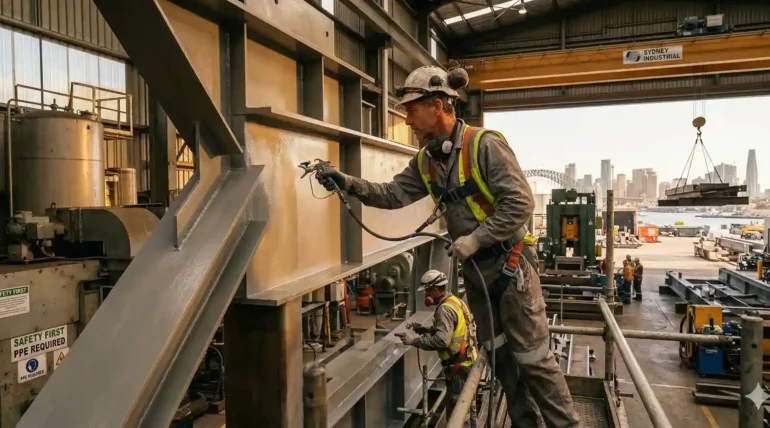
Industrial spaces rarely get the spotlight. Warehouses, factories, and plants: these places run quietly in the background, keeping Sydney moving. But behind the scenes, surfaces take a beating. Heat, moisture, chemicals, and constant use slowly wear everything down. For businesses aiming to maintain a professional image, proper industrial painting services are non-negotiable.
The difference between an average coating and a premium application can impact maintenance expenses, longevity, and even workplace safety. Beyond aesthetics, industrial painting safeguards assets from corrosion, chemicals, and harsh environments. Every coat acts as a shield, extending equipment life and reducing maintenance expenses. The right service balances functionality with a polished, long-lasting finish.How surface prep decides everything in coatings
Picking the right industrial painting contractors is what separates a job that lasts from one that peels. It takes a mix of technical skill and the right gear to turn a basic surface into a high-performance asset. In Sydney, the best teams focus on keeping your facility efficient, up to code, and looking professional.
Why Industrial Painting Services matter long-term
A freshly painted structure might look neat, but appearance is the least valuable outcome here. The real value sits beneath the surface, where coatings actively resist corrosion, chemical spills, and constant abrasion. Proper industrial painting services extend the life of steel, concrete, and equipment in ways that are hard to measure day-to-day but very obvious over time.
There’s a tendency to underestimate how aggressive industrial environments can be. In Sydney, salt-laden air accelerates rust, even inland to a degree. Add temperature shifts and operational stress, and surfaces start breaking down faster than expected. Good industrial painting serves as a sacrificial layer, absorbing damage to protect the underlying material.
Still, not every coating job delivers that benefit. Some projects rely on cheaper systems or rushed industrial painting services applications. That’s where problems begin. Paint starts peeling earlier than expected, exposing surfaces unevenly. Maintenance teams then spend more time patching than preventing. It’s not a dramatic failure; it’s a slow, expensive decline.
How surface prep decides everything in coatings
Anyone who’s worked on-site knows this: preparation decides everything for Industrial Painting Services. Yet it’s the part most often rushed. Proper surface preparation—abrasive blasting, cleaning, and degreasing, takes time and effort, and skipping even small steps can compromise the entire coating system.
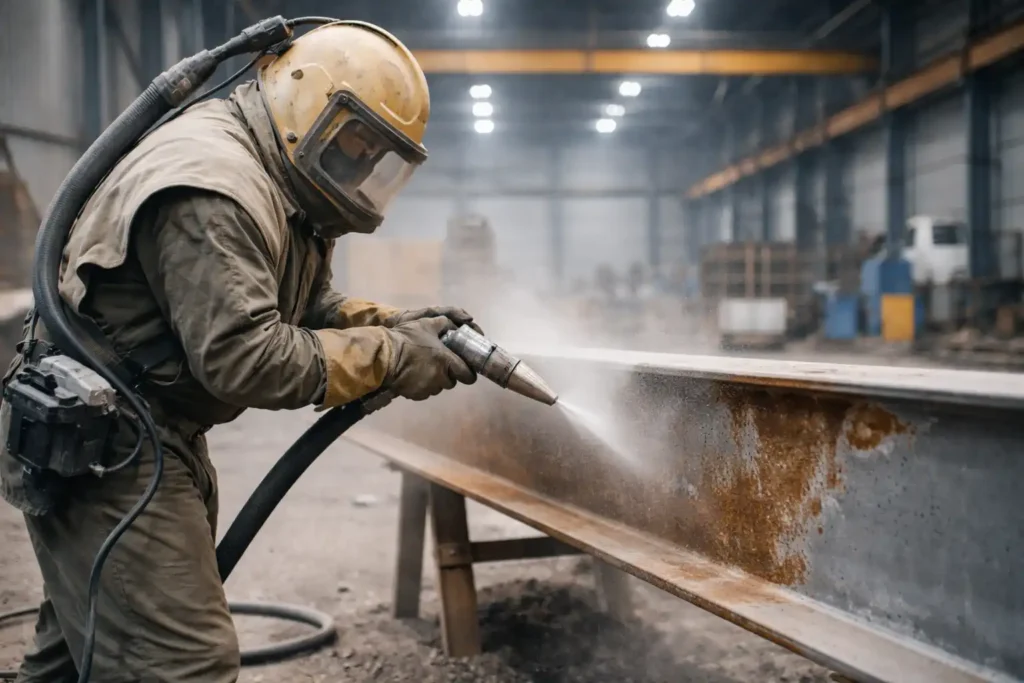
On real jobs, about 70 to 80 percent of the work sits in preparation. Removing old coatings, dealing with rust scale, and ensuring the right surface profile aren’t glamorous work, but they’re what make paint stick. Without that, even premium-grade industrial painting services won’t perform as expected.
There’s also a trade-off here. Extensive prep increases upfront costs, and that’s where some decisions go wrong. Contractors might suggest lighter prep methods to keep quotes competitive. It saves money initially, but over time, adhesion issues appear. The coating fails from underneath, and the cost of rework often exceeds what proper prep would have cost in the first place.
Common coating systems used in Sydney projects
Every environment has its own set of demands. Despite what some suppliers might tell you, there’s no magic bullet coating for industrial painting services. Whether you need epoxy, polyurethane, or a zinc-rich primer depends entirely on what that surface is up against every day.
Epoxy is the go-to for floors because it handles heavy foot traffic and chemicals like a champ. But if you’re working outside, polyurethane is usually better since it won’t break down under the sun. On most Sydney Industrial Painting Services jobs, we actually layer these systems together rather than just hoping one coat does it all.
Epoxy is the go-to for floors because it handles heavy foot traffic and chemicals like a champ. But if you’re working outside, polyurethane is usually better since it won’t break down under the sun. On most Sydney Industrial Painting Services jobs, we actually layer these systems together rather than just hoping one coat does it all.
There’s a common trap of over-specifying. Some managers think buying the most expensive system automatically means it’ll last longer, but if the Industrial Painting Services coating doesn’t match the environment, you’re just asking for trouble. The smart move is to match the spec to the actual conditions, not just the biggest price tag.
Mistakes seen often on real industrial sites
Patterns repeat across sites. One of the most common mistakes is treating industrial painting services as a one-time repair rather than an ongoing strategy. Facilities invest once in these professional coatings and then ignore maintenance until visible damage appears again.
Hiring industrial painting services contractors based solely on the lowest bid is a gamble. Cheap quotes typically indicate that the contractor is compromising on prep work or using inferior materials. You won’t see the failure on day one, but give it a year in a tough environment, and those shortcuts will start showing up.
Industrial painting services often neglect downtime planning. If you rush the schedule to keep production moving, you end up with a coat that hasn’t cured properly or has thin spots. There is always a trade-off: opting for a quick fix today versus ensuring a floor remains stable for the next decade.
Cost factors that actually drive project pricing
Costs in industrial painting services aren’t random, even though they sometimes feel unpredictable. The primary driver is surface condition. A severely corroded structure requires more preparation, which significantly increases labor and material costs.
Material choice is a massive factor. High-end coatings sting a bit more upfront, but they pay for themselves by slashing your maintenance expenses later. That said, you don’t always need the premium option for every wall; it’s all about balancing the cost against how much abuse the surface takes.
People often forget how complex the labor side is. When you’re working in confined spaces or dangling from heights in a live factory, the risk goes way up. That requires specialized safety gear and extra time, which naturally impacts the budget. If you ignore these factors early on, your project’s operational timeline will fall apart.
Choosing the right contractor without guesswork
That is a wonderful perspective. In industrial settings, the hidden variables like surface contaminants, humidity levels, and chemical exposure can cause a cheap industrial painting service job to fail within months. A contractor who doesn’t ask those detailed questions is often a red flag for future maintenance headaches.
Experience matters, but so does transparency. A reliable contractor explains the reasoning behind material choices, preparation methods, and timelines. If those explanations feel vague, that’s usually a warning sign. Clear communication often reflects how the project will be managed.
There’s also value in looking at past projects, not just completed ones, but those done several years ago. Coatings that still perform well after time has passed tell a more accurate story than freshly finished work. Longevity is the real test of effective industrial painting services, not initial appearance.
Maintenance habits that extend coating lifespan
No coating is invincible, and even the best ones eventually need some attention from Industrial Painting Services. Regular walkthroughs are the only way to catch early red flags like tiny cracks, chips, or weird discoloration. If you jump on those small spots now, you won’t be dealing with a massive failure down the road.
Don’t undervalue the importance of a basic cleaning routine, particularly in areas where chemicals or heavy dust are commonplace. When gunk is allowed to sit, it eats through industrial painting services much faster than you’d think. Keeping things clean is a surprisingly effective way to stretch the life of your investment.
However, maintenance isn’t always prioritized. It often gets delayed until visible damage appears. That reactive approach shortens the lifespan of coatings significantly. Preventive maintenance, though less visible, tends to deliver better long-term value across most industrial sites.
Surface preparation: the hidden backbone of durability
No one talks about prep work enough. Yet it’s everything. In industrial painting, preparation can take up to 80% of the total job time.
What preparation includes:
- Sandblasting
- Power washing
- Rust removal
- Degreasing
- Surface repairs
Skipping prep is like building a house on sand. It might stand for a while, but not for long.
Environmental factors unique to Sydney conditions
Sydney presents a mix of environmental challenges. Coastal areas endure salt exposure, while inland zones face temperature fluctuations and dust. These conditions influence how coatings perform over time.
Salt makes it difficult to clean industrial surfaces. It speeds up rust right under the paint, especially if the prep work wasn’t 100% perfect. Even a tiny pinhole allows moisture to crawl in, causing structural damage that you won’t even see until it’s too late.
The sun is just as aggressive as salt. Constant UV exposure causes chalking and fading on the wrong types of paint. If you’re painting anything outdoors, a UV-resistant system is a must. Ignoring the local climate will cause even the most expensive paint to deteriorate too soon.
Balancing durability with operational downtime limits
Managing downtime is easily one of the hardest parts of the job. Most plants can’t just shut down for a week, so the pressure is always on. Fast-cure coatings can help, but they have technical limits.
Quick turnaround systems often sacrifice some durability compared to slower-curing alternatives. That’s the trade-off. In some cases, it makes sense, especially in high-production environments. In others, rushing the process leads to reduced lifespan and more frequent maintenance cycles.
This is where strategic planning becomes crucial. By staggering work shifts or phasing the application, you can keep the facility running without ruining the paint job. You’ll never eliminate downtime entirely, but you can definitely manage it so it doesn’t kill your productivity.
Types of Industrial Painting Services
Sydney’s industrial painting market is diverse, offering solutions for every facility type. Services range from protective coatings for machinery to fireproofing walls and ceilings. Here’s a quick overview:
| Service Type | Purpose | Typical Application |
| Epoxy Coatings | Durability & chemical resistance | Factory floors, labs |
| Anti-Corrosion Paint | Rust prevention | Steel structures, pipelines |
| Fire-Resistant Coatings | Safety compliance | Warehouses, commercial buildings |
| Polyurethane Coatings | UV & weather protection | Exterior walls, machinery |
| Powder Coating | Tough, even finish | Metal components, industrial equipment |
Industrial painting contractors often combine these techniques depending on client requirements. This ensures surfaces are not only visually appealing but also built to withstand years of wear and tear.
Where industrial painting delivers real performance gains
Some areas are just more critical than others. Take structural steel; proper industrial painting services, applied in alignment with the hazardous chemicals code of practice, can add decades to its life. Without that protective barrier, rust will slowly eat away at the load-bearing strength of the entire building.
You can see the results on a factory floor immediately. A sturdy coating stands up to heavy forklifts and foot traffic, making the whole place safer. Adding a slip-resistant finish is a simple way to add functionality, especially in areas where spills are common.
Outside surfaces are often the most neglected, but they’re your first line of defense. Keeping them protected cuts down on weather damage and makes the whole facility more resilient. It may not be the most thrilling part of the building, but it keeps things stable long-term.
The reality behind long-term coating performance
Coating performance isn’t static. It evolves based on exposure, maintenance, and usage patterns. A system that works well in one environment might fail in another, even within the same city.
There’s also a tendency to expect coatings to last exactly as specified. In practice, lifespan varies. Factors like unexpected chemical exposure, physical damage, or environmental shifts can shorten performance. That variability is part of working with real-world conditions.
Having a consistent plan for industrial painting services really pays off. Facilities that treat painting as a regular maintenance task rather than a once-every-ten-years emergency always have better results. It’s about staying ahead of the decay.
Conclusion
Industrial painting isn’t glamorous, but it’s the only thing standing between your assets and total corrosion. When you combine the right prep with high-grade materials and a skilled team, you get a finish that actually survives the toughest Sydney environments.
Sydney’s conditions require smart, well-executed solutions to avoid costly damage later. Cutting corners often leads to higher repair costs over time. Get in touch to secure your surfaces with reliable industrial painting that protects assets for years ahead.
FAQs
How long does industrial painting last?
If it’s applied correctly and looked after, a satisfactory job should last anywhere from 5 to 15 years. The durability of an industrial painting largely depends on the quality of the coating and the amount of damage it endures.
Are industrial painting contractors necessary?
Absolutely. Qualified industrial painting contractors know that the prep work and the application method are just as important as the paint itself. That’s what ensures the coating actually performs the way it’s supposed to.