
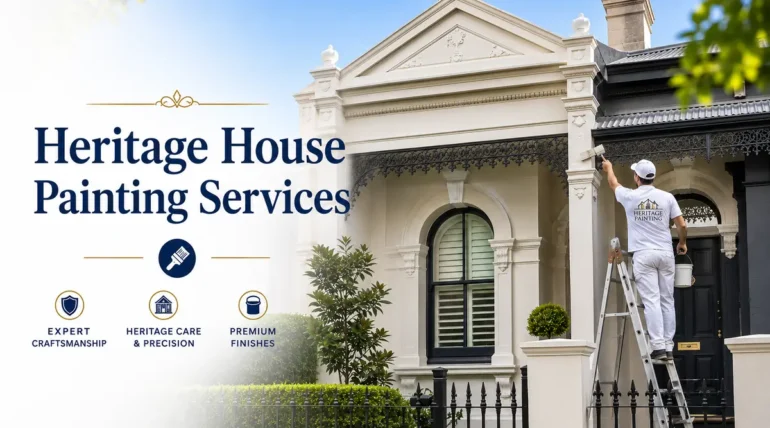
Sydney’s heritage homes carry a kind of quiet presence that modern buildings rarely match. Decorative facades, timber fretwork, high ceilings, sandstone details, stained glass windows – these homes tell stories without saying a word, making specialised Heritage House Painting essential for their preservation.
Local climate conditions do these old places no favours. Between the blistering summer sun, coastal salt spray coming off the harbour, intense humidity, and sudden southerly busters, old paint systems take an absolute beating. Slapping a cheap retail acrylic over fragile, century-old surfaces will trap moisture, peel within a year, and leave you with an expensive remediation bill down the track.
Real Heritage House Painting is a slow, methodical game that demands extreme patience, specialised breathable materials, and a deep understanding of old-school building methods. There are no shortcuts here. Whether you’re dealing with high-exposure exterior heritage house painting, delicate indoor plasterwork, or a complete top-to-bottom heritage home restoration painting project, the goal is always about locking down structural protection without destroying the home’s original soul.
This breakdown cuts straight through the fluff to look at how we safely execute Heritage House Painting to restore old Sydney properties, what traps to look out for, and why hiring specialized, trade-qualified dulux accredited painters sydney property owners trust is the only way to save these timeless buildings from decaying.
Why Heritage Homes Need Special Paint Care in Sydney
A heritage home often looks sturdy from the street, but surfaces tell a different story once work begins. Timber can feel solid yet hold hidden softness near joints. Exterior trims might carry ten layers of paint, each reacting differently under heat or sanding. What seems like a straightforward repaint often turns into a repair job halfway through because older homes have habits that modern buildings simply do not.
One of the common homeowner mistakes is budgeting based on visible paint failure only. A peeling fascia board or flaking weatherboard may look like a cosmetic issue, but in older Sydney homes, those signs often point to moisture movement, poor ventilation, or old repairs buried beneath thick paint. Surface damage rarely exists in isolation. That is why seasoned painters inspect far more than colour loss before pricing a job.
There is also a trade-off that gets overlooked. A faster repaint may save money upfront, but it often locks existing issues under fresh coatings. A slower restoration process costs more in labour, yet tends to avoid repaint cycles happening again far too soon. That practical tension sits at the centre of Heritage House Painting, especially in homes where age has already started changing the building materials themselves.
Hidden Risks Behind Old Painted Surfaces
Paint on an older house can hide much more than fading colour. Beneath cracked or blistered coatings, there may be decayed timber, rusting fixings, moisture ingress, fungal damage, separation in old plaster, or lead-based paint from previous generations. Many owners assume peeling paint means repainting is overdue. Sometimes it means the substrate is already failing. That difference matters because Heritage House Painting done over unresolved damage is usually a temporary disguise.
Lead paint remains one of the biggest hidden issues in older Sydney homes. Sanding without containment, scraping carelessly, or pressure preparation can create contamination risks that affect workers, occupants, gardens, and surrounding areas. This is where simplistic DIY advice becomes dangerous, as proper Heritage House Painting often needs a controlled removal strategy rather than aggressive stripping.
Surface movement creates another problem that modern paint advice often oversimplifies. Old timber expands, contracts, and shifts, which is why professional house painters sydney homeowners trust must focus heavily on prep work before small cracks reopen and decorative trims loosen. A coating system may technically be premium but still fail if movement were ignored; in fieldwork, surface behaviour matters more than paint branding alone.
Heritage House Painting Preparation That Saves Cost
Preparation is where most of the money goes in quality Heritage House Painting, and honestly, that makes sense. Painting over failed surfaces is cheaper on day one and far more expensive two years later. Rotten timber hidden under thick paint does not stop rotting because it received a premium topcoat. Moisture trapped in wall systems does not disappear because a house looks fresh from the street.
Inspection and Heritage House Painting assessment should come before sanding. That sounds obvious, but plenty of projects reverse the order. Skilled restoration painters check for movement, moisture, biological growth, substrate failure, previous incompatible coatings, and hidden damage around windows, fascias, trims, joints, and verandahs. Small defects become expensive when ignored because paint amplifies them visually and locks them in structurally.
Homeowners sometimes resist preparation costs because they are invisible after the job. That is understandable but risky. A painter can show beautiful sample boards and premium paint brochures, but if the substrate beneath is unstable, those coatings are not magic. In practical terms, prep work often determines lifespan more than the final paint brand.
Choosing Paint Systems for Older Heritage Buildings
Modern paint technology offers many excellent products, but not every premium product belongs to an old home. One common misconception is that “best paint” automatically means “best for heritage surfaces.” That is not how restoration works. Breathability, flexibility, adhesion compatibility, substrate moisture behaviour, and finish profile all matter in Heritage House Painting.
Older homes often need coating systems that allow controlled moisture transfer. When undertaking residential exterior painting, Sydney conditions demand dense impermeable paints that can trap moisture inside timber or masonry, leading to blistering, peeling, and hidden decay. A finish may look flawless initially and fail because the building could no longer release moisture the way it historically did.
Colour, sheen, and correct Heritage House Painting practices matter more than people expect. High gloss can flatten architectural depth by reflecting too aggressively, while the wrong whites can make period details look sterile. Restoration painting is often less about dramatic colour trends and more about preserving balance across trims, walls, detailing, and facades.
Exterior Heritage House Painting in Harsh Weather
Sydney’s climate is not gentle on old painted surfaces. Coastal salt, UV intensity, humidity, rain exposure, and sudden heat shifts all create movement and deterioration. Heritage House Painting on exterior surfaces must account for exposure patterns, not just material type. South-facing shaded walls behave differently from western sun-struck facades.
Timber trims often fail first because edges, joints, and decorative sections hold moisture longer. Gutters overflow, flashing details leak, and old seals crack quietly over time. Many homeowners blame “bad paint” when deterioration actually began with water entry from adjacent building failures. Exterior painting frequently exposes maintenance issues that had been hidden under old coatings.
A practical reality: perfect paint cannot compensate for unresolved drainage or structural moisture. That advice sometimes frustrates homeowners expecting a cosmetic project, but experienced heritage home painting specialists know the trade-off. Painting before fixing moisture pathways often means paying twice.
Interior Restoration Requires More Than New Colour
Interior Heritage House Painting tends to look easier than exterior work, but older interiors bring their own complications. Decorative cornices, plaster roses, timber architraves, sash windows, wall movement, and layered coatings all require careful handling. Fast prep methods can destroy details that took craftsmen days to build decades ago.
Paint stripping around interior heritage details is where poor workmanship becomes obvious. Heavy sanding rounds edges, fills decorative lines, and softens architectural definition. The room still looks painted, but Heritage House Painting sharpness disappears when heritage conservation repainting guidelines are ignored. Restoration is often about preserving those fine edges rather than flattening them under modern repaint habits.
Low-odour and low-VOC coatings are now common choices, but compatibility still matters. Old surfaces may need sealing strategies and staged preparation rather than immediate coating, much like selecting a weather resistant heritage paint sydney structures that require handling varying microclimates. Interior heritage work often moves more slowly because preservation is rarely compatible with rushed scheduling.
Residential Heritage Painting Sydney vs Standard Painting
| Feature | Heritage Painting | Standard Painting |
| Surface Prep | Detailed restoration | Basic preparation |
| Paint Selection | Heritage-safe coatings | General paints |
| Repairs | Structural and decorative | Cosmetic only |
| Skills Needed | Specialist expertise | Standard painting |
| Historical Preservation | High priority | Not required |
Hiring Painters With Real Heritage Project Experience
Not every good residential painter is automatically right for Heritage House Painting. That sounds blunt, but field experience matters. Restoration work requires patience, substrate judgement, familiarity with old coatings, repair awareness, and a willingness to slow down where modern crews often speed up.
A polished quote and a premium paint specification do not guarantee Heritage House Painting competence. Asking about lead-safe preparation, timber repair process, coating compatibility, moisture handling, and previous interior heritage painting services usually reveals far more than glossy marketing language. Painters who understand heritage work often talk more about preparation than colour.
Some homeowners choose crews based on completion speed because living through restoration is disruptive. That is understandable, but speed can become expensive. Heritage jobs often reveal hidden defects mid-project, which is why working with reliable commercial painting contractors who understand structural integrity matters; a contractor unwilling to adapt usually paints over problems instead of addressing them.
Common Challenges in Heritage Home Painting Sydney
Older homes often hide issues that only appear during restoration. These can include:
- Peeling or flaking paint
- Lead-based coatings
- Timber rot
- Moisture penetration
- Cracked plaster
- Mould growth
- Faded heritage colours
- Structural movement is causing paint cracks
These challenges make heritage home painting Sydney more complex than modern repainting projects. Experienced professionals inspect surfaces carefully before work begins.
Cost Trade-Offs in Long-Term Restoration Painting
People often ask what Heritage House Painting costs, but the honest answer depends less on paint and more on condition. Two houses that look similar from the street can have completely different restoration requirements once preparation begins. One may need standard prep. Another may need timber replacement, lead containment, moisture repair, masonry treatment, and staged restoration.
The cheapest quote usually excludes risk rather than eliminating it. That distinction matters. Contractors sometimes price only the visible scope, leaving repairs as variations. Homeowners see a lower number and think they are saving money, but costs escalate once work begins. Transparent heritage pricing is rarely the lowest pricing.
There is also a lifespan trade-off. Spending more up front on preparation and compatible systems often extends repaint cycles. Spending less may create earlier failure. That does not mean the most expensive quote is automatically best. It means scope detail matters more than headline numbers.
Conclusion
Restoring an old classic is never as simple as buying a few tins of paint and rolling them on. It’s a delicate process of stabilising fragile substrates, scraping away decades of failed layers, and respecting the craftsmanship of the original builders. Doing Heritage House Painting properly means choosing specialised primers and flexible coatings that stretch with the seasonal movement of old timber.
A well-planned Heritage House Painting project can turn a tired heritage property into a beautifully protected home ready for years to come. Call us today for professional restoration advice, comprehensive surface assessment, and quality painting solutions, or request a free painting quote today to restore heritage charm the right way.
Frequently Asked Questions
1. Why is Heritage House Painting different from normal house painting?
Traditional restoration painting is about preserving the original architectural features and giving old building materials a chance. These homes are filled with brittle lath and plaster, fragile weatherboards, and 20 layers of old, unstable lead paint. Modern production painting techniques (high pressure washing or aggressive mechanical sanding) will shred these delicate profiles to nothing.
2. How often should heritage homes in Sydney be repainted?
Exactly how often a home needs a refresh depends heavily on its exposure. If you’re right on the coast or facing the harsh afternoon sun, the external timber takes a continuous thrashing. Keeping a close eye out for fine hairline cracks or chalking means you can organise targeted maintenance before the water gets into the wood and forces you into a full, expensive strip-back.
3. What paint is best for heritage home painting Sydney?
The ultimate coatings for a premium heritage home painting Sydney project are high-grade, breathable, elastomeric systems designed explicitly for historic lime-plaster and old timber. The paint coating has to keep external rainwater out while allowing internal rising damp to evaporate freely through the film. If you seal an old house up too tightly with basic plastic paints, the substrate will rot from the inside out.
4. Is lead paint a concern in older heritage homes?
Absolutely, and it’s a massive safety issue. Almost every Sydney home built before the 1970s has thick layers of toxic lead paint buried deep under the surface. Running an open sander across these walls is a major health hazard for your family and the neighbourhood. We run chemical tests on every layer before touching the surface, using full containment and wet-scraping methods to keep the site safe.
5. Can heritage house painters Sydney match original colours?
Yes, any good heritage house painting Sydney will use modern colour matching technology and traditional trade methods to recreate authentic period finishes. We can reproduce the exact heritage colour charts, whether classic Brunswick Green, Indian Red or deep ochres, ensuring the historical character is spot-on while using modern, high-durability resins.”
6. Is exterior heritage house painting worth the investment?
It’s the single best thing you can do to save the property. Investing in high-end exterior heritage house painting acts like a defensive shield for old timber facades, delicate timber fretwork, and structural joinery. It blocks UV degradation, stops wet rot in its tracks, and keeps the property’s market value soaring by maintaining that unmistakable street appeal.