
Meta Title:
Meta Description: Exterior House Paint can fail early for several reasons. Discover 7 common problems to check before repainting your Sydney home for longer-lasting results.
If your freshly painted exterior already looks tired, patchy or strangely weathered, you’re probably wondering what went wrong. Good paint shouldn’t start peeling, blistering or fading shortly after the job, so early failure usually points to a problem underneath the surface.
In Sydney, your exterior has plenty to deal with. Strong sunlight, coastal air, sudden rain, humidity and everyday grime can all put pressure on a paint finish. However, the weather often gets blamed for problems that actually started during preparation.
Why does exterior paint fail so early?
I always look beyond the paint itself when I see an exterior coating failing sooner than expected. Paint acts more like the final layer of a system than a magic shield. If the surface underneath has moisture, dirt, cracks or old unstable coatings, even a premium product can struggle.
If you’re planning a repaint, start by checking the existing surface rather than simply choosing a new colour. A fresh coat can make a tired home look fantastic, but it cannot permanently hide a moisture problem or repair damaged substrate.
For homeowners researching Exterior House Paint for a Sydney property, the first step should be understanding what caused the previous coating to fail. You can also explore professional painting information through Exterior House Paint before deciding how much preparation your home needs.
1. Poor surface preparation
This is one of the biggest reasons Exterior House Paint fails prematurely. I’ve seen homeowners focus heavily on choosing the right colour and paint brand while treating preparation as the boring bit. Unfortunately, preparation often determines whether the finish lasts or starts causing headaches.
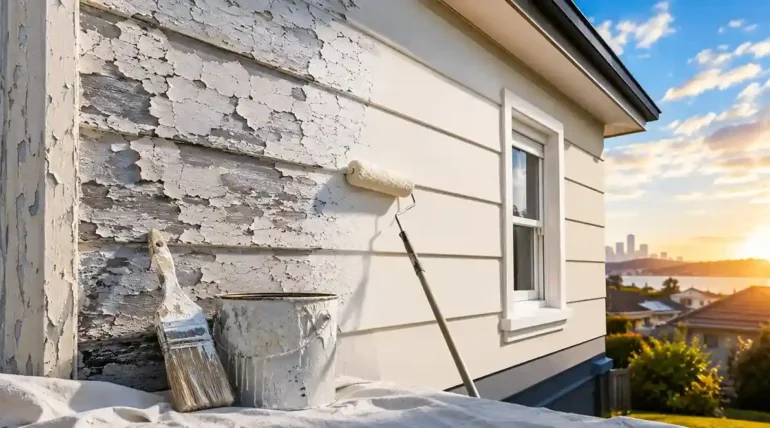
Exterior walls need a clean, stable surface before anyone applies a new coating. Dust, chalky residue, grease, mould, loose paint and dirt can stop the new coating from bonding properly. If the painter simply rolls fresh paint over those contaminants, the new layer may look brilliant for a short time before it begins to crack, peel or flake.
Proper preparation can involve pressure cleaning, scraping loose coatings, sanding rough areas, treating mould, filling cracks and allowing the surface to dry properly. The exact process depends on the wall material and condition.
2. Moisture is trapped behind the paint
Water and paint make a terrible partnership when moisture gets trapped behind the coating.
Sydney homes can experience moisture problems from leaking gutters, damaged downpipes, cracked render, failed seals, roof issues and poor drainage. Coastal homes may also face additional exposure from humid conditions and salt-laden air.
Look closely for bubbling, blistering, peeling or soft patches. These signs can indicate that moisture has found its way behind the coating.
Rather than repainting immediately, find the source first. If water continues entering the wall, the new Exterior House Paint may suffer the same fate as the old coating.
3. Painting over peeling or unstable old paint
A new coat cannot magically stabilise a failing old one.
If existing paint has already started peeling, cracking or flaking, I would treat that as a warning rather than simply covering it with another layer. The new coating may bond to the old paint, but if the old layer eventually lets go, your expensive new finish can come down with it.
Before repainting, inspect the entire exterior for areas where the existing coating has lost adhesion. Remove unstable material, smooth the edges and repair the surface before applying new coatings.
This matters particularly on older Sydney homes, where several generations of paint may sit on the same wall. The surface can look reasonably sound from a distance while hiding weak areas underneath.
4. Ignoring mould, mildew and biological growth
Those little black or green marks on an exterior wall aren’t just an aesthetic nuisance.
Mould and mildew often appear where surfaces stay damp for long periods. You might notice them around shaded walls, under eaves, beside downpipes or in areas with limited airflow. If you paint directly over the growth, you’re essentially giving the problem a stylish new outfit.
Before applying Exterior House Paint, the affected area needs suitable cleaning and treatment. Otherwise, the growth can return and contribute to staining or coating deterioration.
This is especially important when repainting homes surrounded by trees or properties where sections of the exterior receive little direct sunlight. A wall that stays damp takes longer to dry, creating a much tougher environment for an exterior coating.
5. Using the wrong paint for the surface
Not every exterior wall behaves the same way.
Brick, rendered masonry, timber, fibre cement and previously painted surfaces can have different requirements. The coating needs to suit the substrate, existing finish and conditions around the property.
For example, timber can expand and contract with changes in moisture, while masonry can present issues involving porosity and moisture movement. Choosing a product simply because its label says “exterior” doesn’t automatically make it suitable for every surface.
I recommend looking at the whole system: surface condition, primer or sealer requirements, existing coating and final topcoat. A compatible system gives the new Exterior House Paint a much better chance of performing as intended.
6. Sydney’s weather is doing more damage than you realise
Sydney weather can be deceptively tough on painted exteriors.
One week you might get bright, intense sunshine; the next brings heavy rain and humidity. Properties close to the coast also deal with salty air, while exposed walls can receive far more sunlight and wind than sheltered sections.
UV exposure can gradually fade colours and break down the coating. Repeated wetting and drying can place additional stress on the paint film and the surface beneath it.
That doesn’t mean you should blame every failure on the weather. Good preparation and appropriate exterior coatings help a finish handle normal environmental exposure. However, you should consider the property’s orientation and local conditions when planning a repaint.
7. Repainting at the wrong time
Timing matters more than many homeowners realise.
Painting immediately before rain, during very damp conditions or on a surface that hasn’t dried properly can create problems before the coating has had a fair chance to perform. Similarly, extremely hot surfaces can affect how quickly paint dries and how evenly it forms a film.
Before repainting, check the forecast and the condition of the surface rather than relying only on the clock. A wall that feels dry on the outside may still hold moisture underneath.
If you’re scheduling professional Exterior House Paint work in Sydney, your painter should assess the weather, surface temperature, humidity and drying conditions before starting each stage.
Quick exterior paint failure checklist
| Problem | What you may notice | What to check first |
| Poor preparation | Peeling or flaking | Dirt, chalk and loose paint |
| Moisture | Bubbling or blistering | Gutters, downpipes and leaks |
| Old unstable paint | Cracking or lifting | Adhesion of existing coating |
| Mould | Dark or green patches | Damp and shaded areas |
| Wrong coating | Uneven or early deterioration | Surface and product compatibility |
| Weather exposure | Fading or chalking | Sun, rain and coastal conditions |
| Poor timing | Uneven drying or adhesion issues | Forecast and surface moisture |
What should you check before repainting a Sydney home?
Before choosing colours, I’d walk around the property and inspect the exterior in good daylight. Look at corners, window frames, eaves, rendered sections, timber trims and areas underneath gutters. These locations often reveal problems before the larger wall surfaces do.
Pay particular attention to cracks. A tiny hairline crack may look harmless, but larger or recurring cracks can point to movement or moisture issues that need proper assessment before painting.
Also check your gutters and downpipes. A small leak can repeatedly soak the same section of wall, creating a perfect recipe for peeling Exterior House Paint.
If your home was built before 1970, take extra care when disturbing old painted surfaces. Older Australian homes may contain lead-based paint, so sanding or removing old coatings can create a health risk. The NSW Government’s renovation and maintenance guidance recommends appropriate precautions and professional help when dealing with old lead paint.
Should you repaint or repair first?
This is where I think homeowners can save themselves a lot of money.
If the existing paint looks faded but remains firmly bonded, a repaint may be relatively straightforward. However, widespread peeling, cracking, bubbling, mould or moisture staining deserves more investigation.
Think of it like getting dressed for a rainy day. A new jacket doesn’t fix a leaking roof. Likewise, a premium coating doesn’t fix water entering through a damaged gutter or cracked wall.
A professional inspection can help separate cosmetic problems from underlying defects. Once those issues are addressed, your new paint has a much stronger foundation.
How can you make exterior paint last longer?
Start with preparation, not the colour chart.
Clean the surface thoroughly, remove unstable coatings, repair defects and address moisture sources before painting. Choose products designed for the particular exterior surface and follow the manufacturer’s application requirements.
It also helps to keep an eye on the paint after the job. Don’t wait until large sections start peeling before investigating. Early signs such as small cracks, chalking, mould or localised bubbling can be easier and cheaper to address.
Regular gutter cleaning and exterior maintenance can also reduce the amount of stress your paint system faces. In other words, repainting shouldn’t be the end of your maintenance routine.
Conclusion
When Exterior House Paint fails early, the paint itself isn’t always the villain. Poor preparation, moisture, unstable old coatings, mould, unsuitable products, harsh exposure and poor painting conditions can all shorten the life of a finish.
The smartest approach is to investigate before you repaint. Check the walls, find moisture sources, repair damaged areas and make sure the surface can actually support a new coating. That extra attention at the beginning can save you from paying twice for the same job.
If your Sydney home’s exterior needs a fresh start, don’t simply cover the problem and hope for the best. Get in touch with our team to discuss your exterior painting requirements and plan a finish that looks sharp and is built to handle Sydney conditions.
Frequently Asked Questions
How long should exterior house paint last in Sydney?
The lifespan depends on the surface, preparation, coating system, exposure and maintenance. A heavily sun-exposed or coastal property can experience more wear than a sheltered home. Rather than relying on a fixed number of years, inspect the coating regularly for fading, chalking, cracking and peeling.
Why is my exterior paint peeling after only a few years?
Peeling can result from poor surface preparation, moisture, incompatible coatings or painting over unstable old paint. Identify the underlying cause before repainting, otherwise the same problem can return underneath the new finish.
Can I paint over old exterior paint?
You can sometimes paint over existing paint if it remains sound, clean and properly bonded. However, loose, peeling or damaged coatings need attention first. The condition of the existing surface should determine the preparation process.
Does humidity affect exterior painting?
Yes. High humidity can slow drying and may affect how a coating cures, particularly when the surface itself retains moisture. Always consider weather conditions and follow the paint manufacturer’s recommendations.
How do I know if moisture is causing paint failure?
Look for bubbling, blistering, peeling, water stains, mould or recurring deterioration in the same area. Check nearby gutters, downpipes, roof junctions, window seals and other possible water entry points before repainting.
Is exterior painting worth doing before selling a Sydney home?
A well-maintained exterior can improve the first impression of a property and make it look cleaner and better cared for. However, don’t paint purely to hide defects. Fixing underlying problems first usually creates a better result and prevents obvious failures from returning.