A great Commercial Paint Contractors job doesn’t start when the first roller hits the wall. It starts much earlier, with inspections, cleaning, repairs and plenty of careful preparation behind the scenes.
If you’ve ever wondered why experienced Commercial Paint Contractors spend so much time preparing a building before applying colour, the answer is simple: paint can only perform as well as the surface underneath it.
For Sydney businesses, choosing experienced Commercial Paint Contractors can make a major difference to how smoothly the project runs. Commercial buildings often involve larger surfaces, multiple trades, tenants, customers, machinery and tighter schedules than a typical residential project.
Why Building Preparation Matters Before Commercial Painting
I like to think of preparation as the foundation of a painting project. You might choose an impressive colour scheme and premium paint, but neither can hide a dusty wall, peeling coating, damp patch or cracked surface forever.
Professional Commercial Paint Contractors inspect the building first so they can understand exactly what they’re working with. They look at the existing coating, surface condition, moisture, cracks, stains, mould, corrosion and areas that may need additional treatment.
That early inspection also helps the team plan labour, equipment, materials and access requirements. A small office repaint might need straightforward preparation, while a warehouse or multi-storey commercial property can involve elevated work platforms, scaffolding, pressure cleaning and specialised coatings.
In NSW, painting work also sits within the building and trade licensing framework, with specific licensing requirements applying to certain projects. You can check the current requirements through the NSW Government painting work guidance.
1. Inspecting the Building and Existing Paint
Before I prepare any surface, I want to know what I’m dealing with.
A proper commercial painting inspection usually covers:
- Existing paint condition
- Peeling, flaking or blistering areas
- Cracks and damaged surfaces
- Water stains and signs of moisture
- Mould or mildew
- Dirt, grease and other contaminants
- Rust and corrosion on metal surfaces
- Previous repairs or patching
- Access and working-at-height requirements
- Areas that need protection during the project
This step sounds basic, but it can prevent plenty of headaches later.
For example, painting straight over a surface with moisture problems might make the building look fantastic for a short time. Then bubbling, staining or peeling can return, leaving you with another repair job.
Good preparation means identifying the underlying problem before reaching for the paint tin.
2. Protecting Floors, Fixtures and Business Areas
Commercial painting rarely happens inside an empty building. There might be desks, computers, shelving, machinery, signage, flooring and expensive equipment sitting just metres from the work area.
Professional Commercial Paint Contractors plan around those assets.
The team may use protective floor coverings, plastic sheeting, masking materials and temporary barriers to keep paint, dust and cleaning products away from sensitive areas.
For businesses that remain open during painting, the preparation process can also include dividing the work into sections. That approach can help keep walkways, entrances and essential work areas available while the painting progresses.
After all, nobody wants a customer walking into reception only to discover that the floor has unexpectedly become part of the paint palette.
3. Cleaning the Surface Properly
This is where commercial painting preparation can get serious.
Walls and exterior surfaces collect years of dust, grime, grease, pollution, mould and general Sydney weather exposure. If those contaminants remain on the surface, they can interfere with adhesion and affect the final finish.
Depending on the building and surface, Commercial Paint Contractors may use methods such as:
- Pressure cleaning
- Jet blast cleaning
- Scraping
- Degreasing
- Mechanical cleaning
- Hand washing
- Specialised surface preparation
The method depends on the substrate and the condition of the existing coating.
For large exterior or industrial projects, high-pressure cleaning can remove stubborn contaminants much faster than manual cleaning. However, the pressure still needs careful control. Too much force on the wrong surface can cause damage rather than solve the problem.
4. Removing Loose or Failing Paint
If the existing coating has started peeling or flaking, simply painting over it isn’t a clever shortcut.
The loose material needs to go.
Experienced Commercial Paint Contractors remove unstable paint and prepare the underlying surface so the new coating has a sound base to bond with.
Depending on the condition, preparation might involve scraping, sanding or other mechanical methods. The goal isn’t necessarily to remove every trace of old paint. Instead, the team needs to create a stable, suitable surface for the new coating system.
Older buildings require extra care because previous coatings may contain hazardous substances. NSW Government guidance highlights lead paint as a particular consideration during renovation and paint removal, especially in older properties.
That’s why I would never treat old paint removal as a simple weekend DIY exercise when a commercial property presents potential hazards.
5. Repairing Cracks, Holes and Surface Damage
Once cleaning and loose-paint removal reveal the actual surface, the team can identify repairs that need attention.
These might include:
- Small cracks
- Holes
- Damaged plaster
- Deteriorated render
- Surface imperfections
- Damaged timber
- Minor masonry defects
- Rusted metal areas
Commercial Paint Contractors repair these issues before applying the finishing coats because paint shouldn’t become a substitute for building maintenance.
Think of it like ironing a shirt. If you iron over a giant crease without dealing with it properly, you haven’t really solved the problem. You’ve just made the crease look slightly more respectable.
The same principle applies to commercial walls.
6. Treating Mould, Rust and Other Problems
Sydney’s climate can create challenging conditions for commercial buildings, particularly where moisture, poor ventilation or exposure to the elements affects the surface.
If the team discovers mould, they need to address the affected area appropriately rather than simply covering it with fresh paint.
Metal surfaces bring another issue: rust.
Where corrosion appears, Commercial Paint Contractors may need to remove loose rust, clean the metal and apply a suitable protective treatment or primer before finishing coats.
These steps help the coating system do more than look good. They help it provide the protection the building actually needs.
7. Preparing Different Surfaces for Different Coatings
Not every commercial surface behaves the same way.
A concrete wall, plasterboard ceiling, steel beam and previously painted timber surface can all require different preparation methods and coating systems.
That means Commercial Paint Contractors need to understand the substrate before choosing products and application methods.
| Surface | Typical preparation | Main consideration |
| Concrete | Cleaning, repairs and suitable priming | Porosity and surface condition |
| Plasterboard | Filling, sanding and priming | Smoothness and uniform absorption |
| Metal | Cleaning, rust treatment and priming | Corrosion protection |
| Timber | Sanding, cleaning and priming | Adhesion and movement |
| Existing painted surface | Cleaning, scraping and sanding | Paint adhesion |
This is also why product selection matters. The right coating for an internal office wall may not be the right solution for an exposed warehouse exterior.
8. Applying the Correct Primer
Primer often sits quietly beneath the finished paint, but it can play an important role in the overall coating system.
Depending on the surface, a primer can help improve adhesion, create a more uniform base and prepare the substrate for the selected topcoat.
Commercial Paint Contractors assess the surface before deciding whether a primer or specialised preparatory coating is appropriate.
For example, porous surfaces can absorb paint unevenly. Metal may need corrosion-resistant preparation. Previously painted surfaces may require a bonding solution depending on the existing coating and new product system.
Skipping the right preparation because you’re eager to see the new colour is a bit like putting on dress shoes before putting your socks on. Technically, you’ve made progress. Practically, you’ve made a mess.
9. Planning Access, Safety and Site Logistics
Large commercial buildings often require more than ladders and a roller.
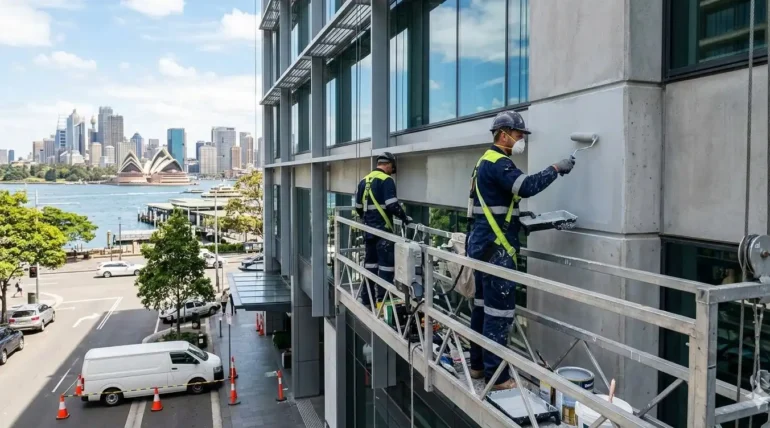
Depending on the property, Commercial Paint Contractors may need scaffolding, elevated work platforms, boom lifts, scissor lifts, ropes or other access equipment.
The team also needs to consider workers, occupants, pedestrians, vehicles and other trades operating around the building.
A proper plan can cover:
- Work zones
- Access equipment
- Protective barriers
- Working-at-height requirements
- Site traffic
- Material storage
- Ventilation
- Emergency access
- Daily clean-up
- Communication with building management
Safety preparation becomes even more important when the project involves industrial areas, high-level exterior surfaces or specialised coatings.
10. Checking the Surface Before Painting Starts
This final preparation check is easy to overlook, but I consider it one of the most important stages.
Before the first finish coat goes down, the team should confirm that the surface is clean, stable, suitably dry and ready for painting.
They can then check repaired areas, masking, access equipment, protection and the selected coating system.
This is the moment when experienced Commercial Paint Contractors can catch small problems before they become expensive ones.
A tiny surface defect might take minutes to fix during preparation. Once several coats of paint cover it, correcting the same issue can take considerably more time.
How Commercial Preparation Can Reduce Business Disruption
For a Sydney business, painting isn’t just about walls. It’s also about keeping the operation moving.
A professional preparation plan can help the team coordinate work around trading hours, tenants, customers and other contractors.
Some projects can use staged work areas, while others may benefit from after-hours or weekend scheduling where practical.
The key is communication.
Before work starts, ask your painting contractor:
- Which areas will you close?
- How long will preparation take?
- Will customers or staff need alternative access?
- What equipment will you bring onsite?
- How will you protect existing fixtures?
- How will you manage dust and debris?
- What happens if you discover damaged surfaces?
The clearer these answers are, the fewer surprises you’re likely to encounter.
Why Preparation Is Often the Difference Between “Fresh” and “Professional”
Anyone can make a wall look freshly painted for a little while.
The real test comes later.
Poor preparation can contribute to uneven finishes, peeling, bubbling, premature wear and visible surface defects. Proper preparation gives the new coating a cleaner foundation and helps the finished result look consistent across the building.
That matters particularly for offices, retail spaces, hospitality venues, warehouses, strata buildings and other commercial properties where appearance influences how people experience the space.
A well-prepared building simply feels different. The lines look cleaner. Colours look more consistent. Surfaces look intentional rather than hurried.
And that’s usually what you want when customers, employees and clients walk through the door.
What Should You Ask Commercial Paint Contractors Before Work Begins?
Before signing off on a commercial painting project, I recommend asking a few practical questions.
How will you prepare the existing surfaces?
Ask whether the team will clean, scrape, sand, repair and prime the surfaces where necessary.
Will you inspect the building before quoting?
A proper site inspection can reveal access, surface and repair requirements that photos may not show.
What happens if you discover damaged surfaces?
Make sure you understand how additional repairs will be identified, discussed and approved.
How will you minimise disruption?
For operating businesses, ask about staging, access, work hours and protection.
What coating system will you use?
The answer should relate to the surface, environment and intended performance rather than simply naming a favourite paint brand.
How will you manage safety?
For larger projects, discuss access equipment, work zones, site procedures and other relevant safety controls.
Conclusion
A successful commercial painting project starts long before the first coat appears.
From the initial inspection and cleaning to repairs, surface treatment, priming, access planning and final checks, Commercial Paint Contractors use preparation to create the conditions for a cleaner, more durable and professional finish.
If you’re planning a commercial repaint in Sydney, don’t judge a contractor only by the colour chart or the final photos. Ask how they prepare the building. That answer can tell you a lot about how seriously they take the finished result.
Ready to plan your next commercial painting project? Get in touch with our team to discuss your Sydney property and painting requirements.
FAQs About Commercial Building Preparation
How long does commercial painting preparation take?
It depends on the building size, surface condition, access requirements and amount of cleaning or repair work involved. A heavily weathered warehouse can require significantly more preparation than a small office.
Do commercial buildings need pressure cleaning before painting?
Not always, but pressure or jet cleaning can be useful for removing dirt, mould, grime and other contaminants from suitable surfaces. The correct method depends on the substrate and coating condition.
Can you paint directly over old commercial paint?
Sometimes, but the existing coating needs to be stable and suitable for the new system. Loose, peeling or contaminated paint usually requires preparation before a new coating goes on.
Why do painters use primer before painting?
Primer can help create a suitable base for the finish coats, improve adhesion and provide more consistent results on certain surfaces. The need for primer depends on the substrate and coating system.
Do commercial painters repair cracks before painting?
Minor surface repairs can form part of painting preparation. Larger structural or building defects may require assessment and repair by the appropriate trade before painting continues.
How do I prepare my business for commercial painting?
Move or protect valuable items, provide access to work areas, inform staff and tenants, discuss trading-hour restrictions and agree on the work schedule with your painting contractor.