
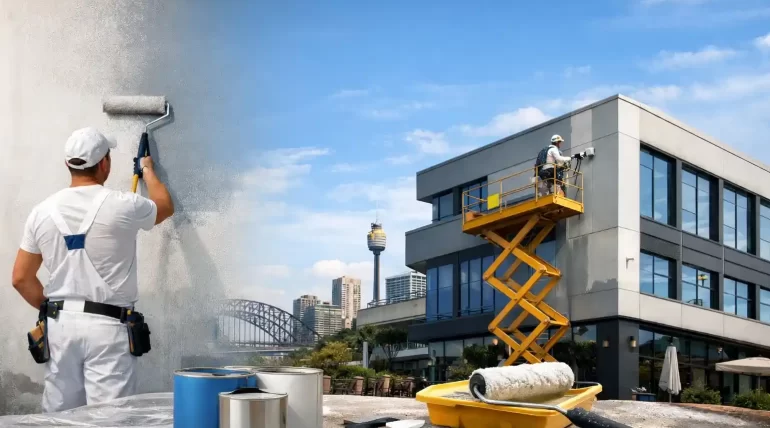
Sydney business owners know the power of first impressions. A fresh paint job on your shopfront or office is like a crisp new suit – it speaks volumes. Commercial house painting in Sydney isn’t just slapping colour on walls; it’s an investment in your brand, building value, and durability. In a climate where the Aussie sun can fade cheap paint fast, quality matters. Research shows a fresh, professional-looking interior or exterior can boost property value by around 5%.
Think of paint as the handshake of your business: you want it firm, confident and inviting. In this guide, I’ve got you covered with everything from planning and budgeting to choosing colours, contractors, and maintenance – all in straightforward Aussie-style advice. Let’s roll (the paint, that is) on this complete handbook for commercial house painting in Sydney!
Why Commercial Paint Quality Matters in Sydney
Your commercial building’s paint job is more than decoration; it’s protection and branding. A worn-out facade can scream “neglect” to customers and tenants, while a crisp finish says “we care.” In Sydney’s harsh sun and coastal air, low-quality paint will blister and peel. The intense UV rays here break down pigments and binders over time, causing colours to fade and surfaces to chalk.
To counteract that, experts recommend UV-resistant, high-quality paints for outdoor walls. These premium formulations contain additives that slow fading and hold up to moisture, salt and heat. Inside your business, a fresh coat of durable commercial paint keeps walls easy to clean and looking sharp longer.
Beyond durability, the right paint ties into your brand identity. Commercial projects often use colour consultants to pick shades that appeal to customers. A boutique or café might choose warm, welcoming tones, while an office block may opt for a professional palette.
The key is consistency: quality paints (even white) can have different sheens and cover differently, so don’t skimp – premium brands last longer and maintain vibrancy, which protects your initial investment. In short, commercial house painting in Sydney isn’t a cheap DIY — it’s a strategic move. Spend a bit more on top-tier paint and prep now, and you’ll save money on repairs and repaints down the track.
Commercial vs Residential Painting: Big Jobs, Bigger Stakes
Not all painting jobs are created equal. Commercial painting differs from home renovations in scale, materials and regulations. Business spaces often have larger walls, ceilings, or multiple floors, meaning more paint and manpower.
They also require quick-drying, heavy-duty coatings – for example, many pros use latex-based paints in commercial settings because they dry fast and let you open for business sooner. Industrial sites (like warehouses) might use oil-based or specialist epoxy coatings for extra toughness. In contrast, home painting projects are smaller and usually more flexible on timing.
These differences mean DIY doesn’t usually cut it for commercial jobs. Untrained painting can lead to uneven coats or peeling, which looks unprofessional. As one industry guide notes, a DIY approach “can harm your business’s professional image” and often overlooks critical prep or safety steps. By hiring commercial painting specialists, you get crews experienced with big spaces, proper tools (lifts, scaffolds) and compliance know-how.
They also understand Sydney’s unique climate – the intense sun and coastal humidity – and choose paints that withstand our conditions. In short, commercial painters work faster and smarter: they cover large areas efficiently, minimize downtime, and deliver a uniform, durable finish that a weekend warrior likely can’t match.
Planning Your Painting Project
A successful paint job starts long before the first brushstroke. Begin with a thorough assessment of your property: walk around and list every area that needs paint (walls, doors, trim, ceilings), and note any cracks, peeling or damp spots. This “before” survey helps you and your contractor agree on the scope.
Good planning also means considering logistics. For example, coordinate painting at times that minimize disruption – maybe after hours or during a quiet season. Commercial painters often work in shifts or section off areas, so communicate with building users to find the best window for work.
Surface preparation is critical. Dirt, grease or flaking paint will ruin the finish if not fixed. Pros will pressure-wash, scrape off old paint, sand rough patches, fill holes, and prime bare spots before painting. Think of this as thorough spring-cleaning for walls.
You should too: clear furniture, cover floors, and move items away from walls. The payoff is huge – a well-prepped surface means the paint adheres properly and lasts longer.
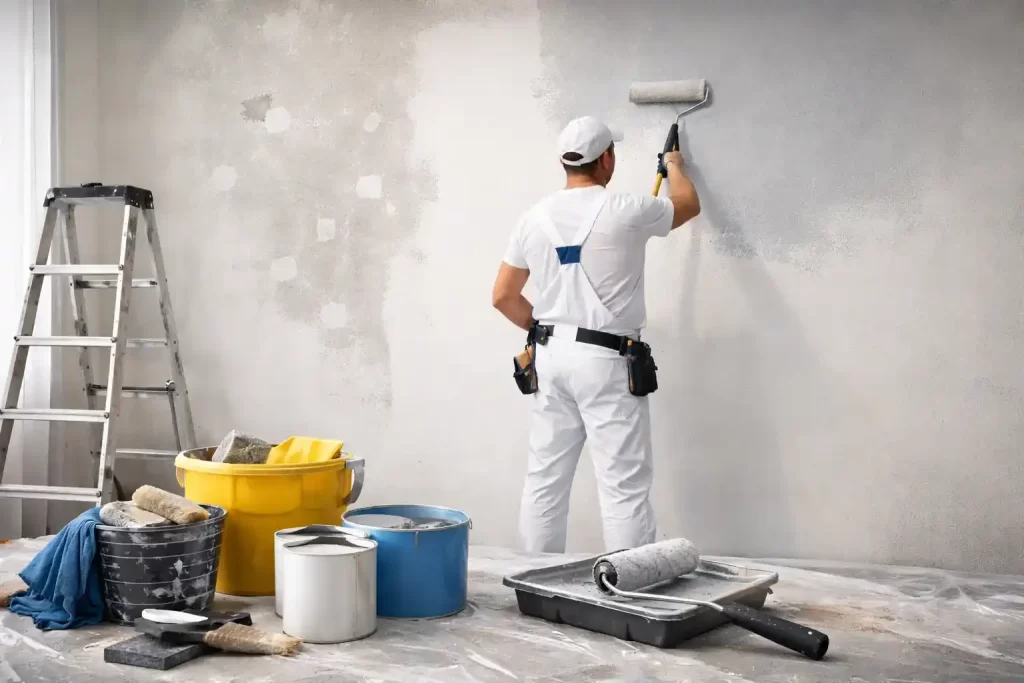
A professional painter using a roller to coat an interior wall. This step comes after meticulous surface preparation (cleaning, sanding and patching) to ensure a smooth, long-lasting finish.
Once prep is done, the painting itself is surprisingly swift. Experienced crews use rollers, brushes and sometimes sprayers (for very large areas) to apply paint evenly. They typically apply at least two coats for durability, allowing proper drying time in between.
You’ll notice less mess and more efficiency than a DIY job – professionals know how much paint to mix, how to avoid drips, and how to keep lines straight around edges. By the end of this phase, you’ll see your vision come to life: crisp lines, uniform color, and a fresh look that reflects your style.
Safety, Compliance & Sydney Regulations
Working on a commercial building often means heights, ladders and safety risks, which is why all commercial painting projects in Sydney must comply with SafeWork NSW guidelines to ensure proper workplace health and safety practices. For example, painters must use proper scaffolding or harnesses when working above certain heights, and they must handle hazardous materials (like solvents) according to regulations.
Professional painters carry public liability and workers’ compensation insurance, so you won’t be on the hook if someone slips or if an accident happens on site. This insurance is crucial – always ask contractors about it before the job.
Additionally, any trade waste (old paint, chemicals) must be disposed of responsibly. Licensed painters know the local council and state guidelines, so they won’t illegally dump waste or risk fines. In some cases, painting a commercial building even requires permits (for example, if it’s a heritage-listed facade or if scaffolding blocks a footpath). Make sure your contractor checks and secures any needed approvals. It’s a hassle you don’t want, so having pros handle the paperwork avoids headaches.
Safety isn’t just about gear – it’s about planning work to avoid disrupting business, customers or residents. As one painting guide advises, coordinate with your operations team to pick ideal painting times.
Clear signage, temporary closures, or wrapping areas off-limits can keep everyone safe. After all, a safe job site means a smooth project. Imagine the image below of a painter on a ladder – professionals train for this work, not casual weekend warriors.
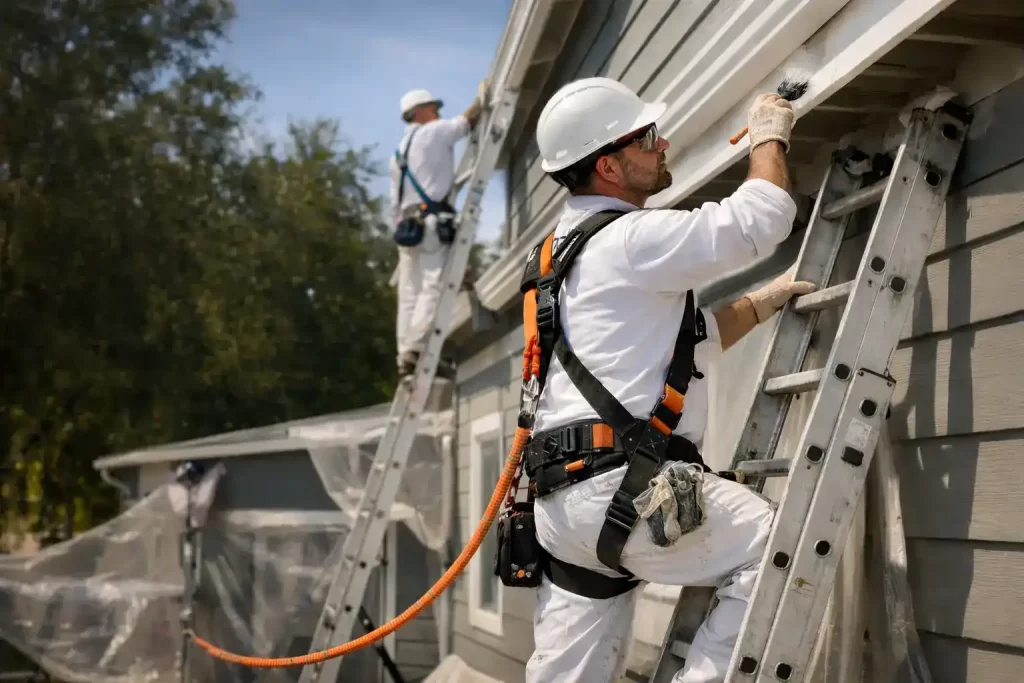
An exterior commercial painting project in action: a trained painter on a secure ladder, equipped with safety gear. For large buildings, crews also use scaffolds or lifts. Safety training and protocols protect both workers and your property during the paint job.
Hiring the Right Commercial Painter
Your paint is only as good as the people applying it. Choosing the right contractor is crucial. Here’s how to vet them:
Get quotes and compare
Master Painters Australia (the industry body) recommends getting at least three detailed quotes. Each should specify prep work, paint quality, coat count, and total cost. Compare line by line – a lower price could mean skipped steps or inferior paint.
Check credentials
In Sydney, painters don’t have a universal licence like electricians do, but trade certification and industry memberships matter. Ask if they’re members of professional associations (e.g. Master Painters) or have relevant trade qualifications. These imply training in proper techniques and safety.
Inspect portfolios and references
Good painters keep a gallery of past commercial jobs. Ask to see examples of similar projects (offices, retail spaces, etc.) to judge quality and consistency. Contact past clients if possible – word-of-mouth and reviews reveal how reliable and respectful they are.
Check insurance and warranties
A reputable contractor should carry insurance for accidents and offer a workmanship warranty. As the industry experts note, “Insurance and warranties offer peace of mind… make sure to ask about these before hiring”. In practice, this means if a mishap occurs (or paint peels early), you’re covered or they’ll fix it.
In short, hire experience and honesty, not just the lowest bidder. A reliable team of commercial painters will treat your job with professionalism – arriving on time, protecting your furniture and assets, and keeping you informed. If something sounds too good to be true (like a ridiculously low quote), it usually is.
Remember: you get what you pay for. As one Sydney contractor bluntly puts it, cheap quotes often lead to very expensive rework later. For further guidance, the Master Painters Australia Painting Guide Checklist offers tips on selecting and working with painting contractors, and even notes where registration is required in some states.
Cost Factors & Budgeting
Budgeting for a commercial paint job can be tricky, but having ballpark numbers helps. In Sydney, a typical range is $50–$80 per square metre. This covers materials and labour. Lower-end quotes around $10–$20/m² might exist for very simple tasks, while premium services (fast turnaround, high-end finishes) can reach $90–$110/hr.
To make it concrete, here are sample project estimates from industry sources:
| Project Size & Type | Area | Estimate (Sydney) |
| Small retail shop | up to 500 m² | $3,000 – $6,000 |
| Small office (single room) | ~20–50 m² | $400 – $1,500 |
| Medium office building | 500–1,500 m² | $10,000 – $20,000 |
| Large industrial facility/warehouse | 1,500+ m² | $25,000+ |
Table: Typical commercial painting costs in Sydney (examples from industry data).
These numbers jump around because many factors affect the final bill. Major cost drivers include:
- Size & Complexity: Bigger area means more paint and labour. Complex features (high ceilings, ornate moldings, difficult access) require extra effort – scaffolding or lifts add time and cost.
- Surface Condition: Old or damaged walls bump up costs. If paint is peeling or walls have cracks, professionals will spend time scraping, sanding, patching and priming. (If you skip this, the new paint won’t last.)
- Paint Quality & Type: Standard paints are cheaper upfront, but premium commercial-grade coatings last longer and often save money over time. High-traffic or humid areas need special formulations (anti-mould, stain-resistant), which cost more.
- Location & Access: Central Sydney projects can be pricier due to logistics – think parking, permits or restricted access (especially in CBD areas). Tricky site conditions (narrow laneways, steep driveways) might require extra equipment or manpower.
Budget for all-inclusive quotes. A low quote that omits preparation or cleanup will cost you later. Industry pros advise looking at the big picture: an extra $1,000 for thorough prep, quality paint, and a solid warranty is often better value than a $500 cheaper quote that cuts corners.
To stretch your dollars: bundle interior and exterior jobs together, or plan painting during off-peak seasons when some painters offer deals. But don’t rush selection – clarity now prevents sticker shock later. Always ask contractors what’s included (paint brand/quality, coats, cleanup) to avoid surprise bills.
After the Paint Dries: Maintenance & Warranties
A commercial paint job isn’t a one-and-done deal. To keep that fresh look lasting, do a little upkeep. Immediately after completion, conduct a walk-around to note any touch-ups needed (even pros can miss small spots). Then ask your painter for care instructions – many recommend gentle cleaning (no harsh chemicals) and checking for scuffs or chips periodically.
Ongoing maintenance pays off. Even high-grade paint will show wear after years of sun, rain or salty air. Plan to lightly clean surfaces (remove dirt, bird droppings, etc.) and address minor scratches quickly with matching touch-up paint. For exterior walls, look up at least once a year; early crack-filling prevents moisture problems. According to painting experts, regular touch-ups can keep surfaces vibrant “for years” and protect your initial investment.
Don’t forget warranties. Reputable contractors will offer a workmanship guarantee (commonly 1–5 years depending on job scope). This backs their work against premature peeling or fading. As noted earlier, always confirm insurance and warranty details before signing. That way, if an issue crops up, you have recourse. A painting contract should spell out these promises, along with the paint brand and maintenance tips.
Finally, keep records of colors and formulas used. In Sydney, even paint batches of the same color can vary slightly. Having the exact brand and code on file saves headaches if you need to buy more paint for repairs. Store any leftover paint safely (labelled with location and date). When you’re proactive about maintenance, your freshly painted business will continue to impress customers and last well into the future.
Conclusion
A smart commercial house painting job in Sydney is more than fresh color – it’s a strategic upgrade to your business’s curb appeal and longevity. We’ve covered the full spectrum: why quality matters (hello Aussie sun and property values), how it differs from a home makeover, and the nuts-and-bolts of planning, safety and hiring pros. The takeaway? Treat your building as an asset. Invest in good paint, prep thoroughly, hire certified painters, and protect your investment with maintenance and warranties.
Now it’s over to you. Lace up your work boots (or just call the experts) and give your commercial space the facelift it deserves. With the right team and materials, commercial house painting in Sydney will keep your walls looking sharp, your brand shining, and your business running smoothly for years to come.
If you’re planning a commercial painting project and want reliable results, explore our commercial building painting services in Sydney. Our experienced team delivers high-quality finishes designed to withstand Sydney’s climate while minimising disruption to your business.
FAQ
What is commercial house painting?
Commercial painting applies professional paintwork to businesses (offices, shops, schools, etc.) rather than homes. It uses durable coatings and meets safety codes.
How much does commercial painting cost in Sydney?
Typically about $50–$80 per m². Small jobs (under 100 m²) might be a few thousand dollars; large projects (1,000+m²) often exceed $20k.
How often should I repaint?
It varies with exposure. In Sydney’s strong sun, exterior paint often needs refresh every 5–10 years. Interiors may last longer (7–15 years) if well-maintained. Inspect surfaces annually for fading or peeling.