
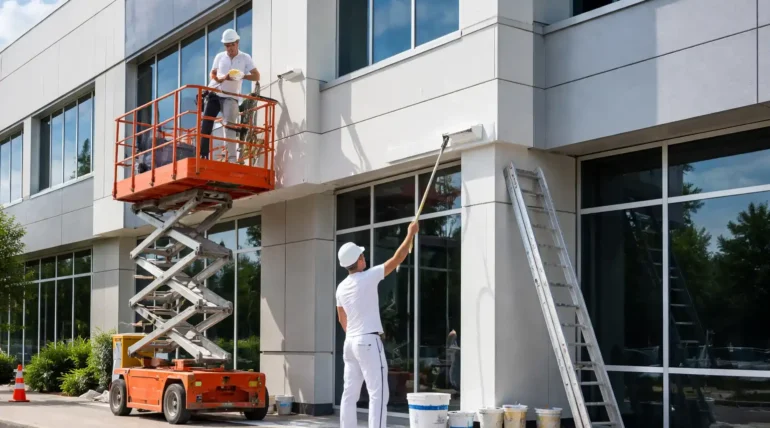
A commercial building says a lot before anyone walks through the front door. Faded walls, peeling paint and tired-looking surfaces can quickly make even a busy Sydney business look neglected.
So, how often should you plan Commercial Building Repainting? There is no magic date that works for every property. Building materials, weather exposure, foot traffic, paint quality and surface condition all play a part.
How Often Should Commercial Buildings Be Repainted?
As a general guide, many commercial exteriors need a repaint roughly every 5 to 10 years, while some well-maintained surfaces can last longer. Highly exposed buildings may need attention sooner.
For Sydney properties, I would not rely on the calendar alone. Instead, combine a regular visual inspection with the age and condition of the existing coating.
A building near the coast may face salt air, strong sunlight, wind and moisture. Meanwhile, an inner-city office might deal with pollution, dust and heavy pedestrian traffic. These conditions can wear down a coating at different speeds.
If you are planning Commercial Building Repainting, think of the project as part of your property’s maintenance plan rather than simply a cosmetic upgrade.
A Practical Repainting Timeline for Commercial Properties
There is no universal repainting schedule, but the following ranges can help you plan inspections and maintenance.
| Commercial area | General repainting guide | What affects the timing? |
| Office exteriors | 5–10 years | Sun, rain, pollution and coating quality |
| Office interiors | 3–7 years | Foot traffic, scuffs and tenant use |
| Retail spaces | 2–5 years | Customer traffic and branding changes |
| Restaurants and cafés | 2–5 years | Grease, moisture, cleaning and traffic |
| Warehouses | 5–10 years | Dust, machinery and surface exposure |
| Industrial buildings | 5–10 years | Chemicals, moisture, corrosion and usage |
| Common areas | 3–7 years | Foot traffic and cleaning frequency |
These figures should act as planning guides, not hard deadlines. A condition assessment can tell you much more than a calendar can.
Government building maintenance guidance also supports a planned approach to upkeep rather than waiting for building elements to deteriorate. For example, maintenance guidance published by the Australian Government and state authorities includes painting and surface preparation as recognised maintenance activities. NSW Government guidance on painting work
What Determines the Life of Commercial Paint?
Why can one building look fresh after eight years while another starts looking tired much sooner?
The answer usually comes down to several factors.
1. The Building’s Location
Sydney has a mix of coastal, suburban and inner-city environments. A building closer to the coast can experience salt-laden air and higher moisture exposure, while a city property may face pollution and grime.
South-facing and heavily exposed surfaces can also weather differently from sheltered areas.
2. The Surface Material
Brick, rendered masonry, concrete, timber and metal all behave differently.
For example, metal surfaces may need careful attention to rust and corrosion before a new coating goes on. Rendered surfaces may develop cracks that need proper repair before painting.
That is why good commercial painting preparation matters just as much as the paint itself.
3. The Quality of the Previous Paint Job
A premium paint product cannot magically fix poor preparation.
If the previous coating went onto a dirty, chalky, damp or poorly repaired surface, the new finish may struggle to last. Proper cleaning, preparation, repairs, priming and product selection can make a major difference.
4. Building Use
A quiet office and a busy retail centre experience very different levels of wear.
Think about entrances, corridors, reception areas, stairwells and shared spaces. Hundreds of people brushing against walls every day can leave marks surprisingly quickly.
5. Maintenance
Regular cleaning and early touch-ups can help extend the useful life of a coating.
You do not necessarily need a complete repaint every time you notice a small problem. Sometimes targeted maintenance can keep a larger project at bay.
7 Signs Your Commercial Building Needs Repainting
You do not need to wait until the paint looks completely ruined.
Watch for these warning signs:
1. Fading Colour
If your once-sharp exterior now looks washed out, UV exposure may have taken its toll.
2. Peeling or Flaking Paint
Peeling rarely improves by itself. It can expose the underlying surface to moisture and further deterioration.
3. Cracking
Small paint cracks may point towards coating failure, while larger or recurring cracks may require further investigation before painting.
4. Chalking
Run your hand across an exterior surface. If a noticeable powdery residue transfers to your fingers, the coating may have started to break down.
5. Mould or Mildew
Mould growth can indicate moisture problems. Simply painting over it without addressing the cause can lead to the same problem returning.
6. Rust Staining
Rust around metal surfaces, fixings or exposed steel needs attention before repainting.
7. Your Building Looks Tired
Sometimes the most obvious sign is simply visual.
If the entrance looks dated, the colours have lost their impact and the exterior no longer reflects the quality of your business, it may be time to refresh the property.
Why Sydney Weather Matters for Commercial Repainting
Sydney’s weather can be tough on exterior coatings.
Sunlight gradually affects colour and coating performance, while rain and moisture can contribute to surface deterioration. Coastal properties can also face additional exposure to salt and humidity.
That does not mean every Sydney building needs repainting every few years. Instead, you should consider the specific exposure of each building elevation.
A sheltered wall may remain in good condition while an exposed façade starts showing fading or chalking much earlier.
This is one reason I recommend regular inspections instead of waiting for a fixed repaint date.
Commercial Exterior Painting vs Interior Repainting
Exterior and interior surfaces have different maintenance needs.
Exterior painting needs to cope with:
- UV exposure
- Rain and moisture
- Wind
- Pollution
- Salt air in coastal areas
- Temperature changes
- Surface movement
Interior painting deals more with:
- Foot traffic
- Scuff marks
- Cleaning
- Furniture movement
- Stains
- High-use areas
For that reason, you might repaint the exterior every several years while refreshing high-traffic interior spaces more frequently.
A smart maintenance plan does not treat the whole building as one giant paint box.
How to Plan Commercial Building Repainting Without Disrupting Business
A commercial repaint does not have to bring your business to a grinding halt.
If customers, employees or tenants use the building every day, plan the work around normal operations.
A practical approach can include:
- Inspect the building first – Identify damaged, peeling or deteriorated surfaces.
- Prioritise high-risk areas – Deal with moisture, cracking, rust and other surface problems before painting.
- Divide the project into stages – Large buildings can often benefit from section-by-section work.
- Plan access carefully – Consider entrances, loading areas, car parks and pedestrian paths.
- Schedule disruptive work strategically – Some businesses may benefit from weekend or after-hours work.
- Communicate with tenants and staff – A clear schedule prevents unnecessary surprises.
- Allow time for preparation – Rushing preparation can compromise the final result.
For a busy Sydney business, good project planning can be just as important as selecting the right colour.
Does Commercial Building Repainting Protect the Property?
Yes, when the underlying surface receives the right preparation and coating system.
Paint does more than change a building’s colour. A suitable coating can help protect exposed surfaces from environmental conditions and slow deterioration.
However, paint should never become a substitute for building repairs.
If you have water ingress, significant cracking, corrosion or other building defects, address the underlying issue before applying a new finish.
A beautiful coat of paint cannot negotiate with a leaking roof.
How to Make Commercial Paint Last Longer
Once you invest in a repaint, a little maintenance can help protect the result.
Keep surfaces clean
Remove accumulated dirt, dust and grime where appropriate. Dirty surfaces can make a relatively new paint job look older than it actually is.
Inspect regularly
Schedule visual checks rather than waiting for a major problem.
Look for peeling, cracking, fading, mould, chalking and rust.
Fix small problems early
A small damaged section can become a much larger repair if moisture gets underneath the coating.
Keep drainage working
Blocked gutters and poor water drainage can expose walls and other surfaces to unnecessary moisture.
Record your maintenance
Keep notes about when the building was painted, what products were used and which areas received repairs. This information can make future maintenance planning much easier.
Should You Repaint or Just Touch Up?
This depends on the condition and coverage of the existing coating.
A touch-up may make sense when the majority of the paint remains sound and only isolated areas show damage.
A full repaint may make more sense when you have widespread fading, peeling, chalking, colour inconsistency or multiple damaged areas.
You should also consider the appearance of the whole building. If you touch up several sections with slightly different ages, colours can become noticeably inconsistent.
For commercial properties, that patchwork look rarely creates the polished impression most businesses want.
How to Choose the Right Commercial Painting Approach
Before starting a Commercial Building Repainting project, look beyond the price of the paint.
Ask your painting contractor about:
- Surface preparation
- Repairs and crack treatment
- Primers
- Recommended coating systems
- Number of coats
- Expected durability
- Access requirements
- Work staging
- Protection of surrounding areas
- Cleanup
- Maintenance recommendations
A professional assessment should consider the actual condition of your property rather than simply assigning a repaint date.
What Is the Best Time to Repaint a Commercial Building in Sydney?
Sydney’s generally varied weather means planning matters.
For exterior work, your contractor should consider weather conditions, surface moisture and the manufacturer’s requirements for application and curing.
You should also plan around your business calendar.
For example, a retailer may prefer quieter trading periods, while an office might schedule disruptive work outside standard business hours. A warehouse may need painting coordinated around deliveries and equipment movement.
The best timing is therefore a combination of building condition, weather, business operations and project requirements.
Commercial Building Repainting: A Simple Planning Checklist
Before you approve the next project, run through this checklist:
- When was the building last painted?
- Are the walls fading or chalking?
- Can you see peeling or cracking?
- Are there signs of moisture or mould?
- Is there rust on metal surfaces?
- Does the building still represent your business well?
- Do high-traffic areas need attention?
- Does the exterior need more urgent work than the interior?
- Will tenants or customers need alternative access?
- Does the project require staged or after-hours work?
- Have the surfaces been properly assessed?
- Have you allowed enough time for preparation?
If several boxes are ticking, it may be time to arrange a professional assessment.
Conclusion
Commercial Building Repainting works best when you treat it as part of an ongoing property maintenance strategy rather than a last-minute cosmetic fix.
For many Sydney commercial properties, a repaint may fall somewhere around the 5–10-year mark, but your building’s condition should have the final say. Weather exposure, surface material, traffic, previous preparation and maintenance can all move that timeline forward or back.
Keep an eye on fading, chalking, peeling, cracking, mould and rust. More importantly, inspect your building regularly and deal with small problems before they become expensive ones.
Planning a repaint for your office, retail property, warehouse or commercial building? Get in touch with our team to discuss your painting requirements and plan the next step.
FAQs About Commercial Building Repainting
How often should a commercial building be repainted?
Many commercial buildings need repainting roughly every 5–10 years, but the actual interval depends on surface condition, exposure, building use, paint quality and previous preparation.
How do I know if my commercial building needs repainting?
Look for fading, chalking, peeling, cracking, mould, rust and general surface deterioration. A professional inspection can help determine whether you need touch-ups, repairs or a full repaint.
Does Sydney weather affect commercial paint?
Yes. UV exposure, rain, moisture, wind and coastal conditions can all affect exterior coatings. Buildings with greater exposure may need more frequent maintenance.
Can I repaint a commercial building while it remains open?
Often, yes. Your contractor can plan staged work, restricted access or after-hours painting to reduce disruption. The right approach depends on the building and business.
Does surface preparation really matter?
Absolutely. Cleaning, sanding, repairing damaged areas and applying suitable primers can help the new coating bond properly and perform as intended.
Is commercial building repainting only about appearance?
No. A suitable coating can improve appearance while helping protect the underlying surface from environmental exposure. However, serious building defects need proper repairs rather than simply another coat of paint.
Should I repaint the whole building at once?
Not always. A staged approach may suit large properties or occupied buildings. However, the right approach depends on the condition, appearance and operational requirements of the property.