
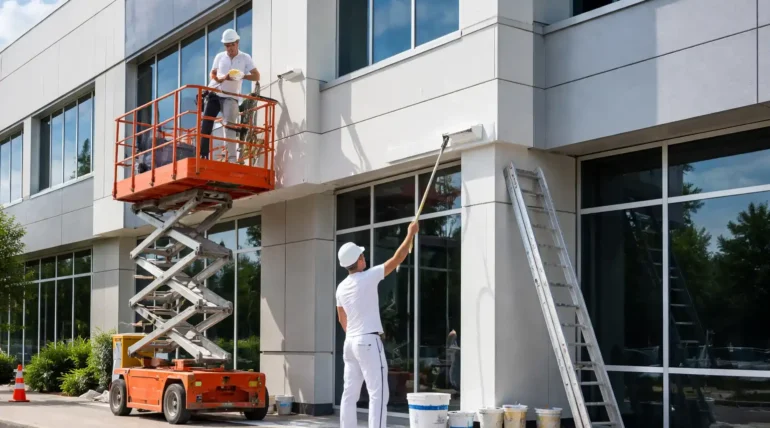
Planning commercial building painting is rarely just about making a property look new. In Sydney, it involves balancing appearance with changing weather conditions, daily operations, and long-term maintenance demands. When planning is rushed, problems do not appear immediately; they surface later as uneven fading, peeling around high-traffic entrances, and finishes that fail under constant use.
What makes this tricky is that most problems don’t come from bad painting. They stem from decisions made too early without fully understanding how the building behaves. For example, a retail space wears down very differently compared to an office tower or warehouse. Recognizing these differences is crucial for effective planning.
This guide takes a more grounded approach. It focuses on how to plan commercial building painting that actually fits your building, your schedule, and how people use the space every day.
Analyse Building Function And Stress Points
Before choosing colors or finishes, think about how the facility will be used every day. Recognizing stress points like heavy foot traffic or wear areas helps property managers feel assured that their choices are effective and long-lasting.
In most commercial buildings in Sydney, the entryways and hallways are where the most stress happens. You might see scuff marks near elevators or on public walkways long before anything else starts to fade. Quiet areas, on the other hand, tend to keep their polish for a lot longer, even with simple coatings.
The kind of business also changes what is important. A clinic or hospitality facility needs surfaces that can withstand frequent cleaning, whereas a warehouse is more concerned with how well things hold up than how they look. That is where the difference between commercial building painting and large-scale commercial and industrial painting becomes important.
Once you map these stress points properly, the rest of the planning becomes far more precise and less guesswork.
Select Coating Systems With Purpose
This is often the point where planning decisions start to fall apart. Paint should not be chosen solely for short-term appearance; it must be selected with long-term performance in mind, especially when the building is in constant use. Focusing on durability from the start helps avoid repeated maintenance and keeps costs under control over time.
In Sydney, the cost of a painting project goes beyond materials and labour; it is also shaped by how much the work interrupts your day-to-day operations. Even a short disruption, such as temporarily closing a shopfront or limiting access to parts of an office, can start to affect revenue and slow things down more than expected.
That is why commercial building painting budgets should be treated as a balance between upfront cost and long-term savings, rather than just a fixed number.
Here is a more practical way to look at it:
| Area Type | Coating Strategy | Why It Works |
| Reception areas | Washable low-sheen acrylic | Easy to maintain, looks clean longer |
| Corridors | Scuff-resistant coatings | Handles daily contact and wear |
| Metal structures | Epoxy-based systems | Protects against rust over time |
| Exterior facades | Flexible weatherproof coatings | Deals with Sydney’s UV and moisture |
Using commercial and industrial paints this way makes the result feel consistent months later, not just on day one.
Structure Budget Around Lifecycle Value
Budget conversations usually start with numbers, but they should really start with lifespan. How long do you want the finish to last before it needs attention again? That one question changes how decisions are made.
A cheaper option might look fine initially, but if it needs repainting in a few years, the overall cost quietly doubles. On the other hand, investing more upfront, especially in preparation and materials, often reduces the need to revisit the job.
There’s also a cost side that often gets missed. In Sydney, the real cost in a commercial building painting project is rarely the paint itself; it is the downtime that comes with it. What seems like a small interruption can quickly escalate into a much larger operational issue. Even briefly closing a shopfront or limiting office access can affect revenue, slow down operations, and put pressure on day-to-day workflow.
Instead of treating the budget as a fixed figure, it makes more sense to look at it as a trade-off. What you spend upfront should reduce how much you lose later. That shift in thinking usually leads to smarter, more practical decisions.
Treat Surface Preparation As A Technical Stage
Preparation is often rushed, mainly because it doesn’t look like progress. But emphasizing that proper surface prep prevents peeling, bubbling, or uneven finishes helps maintenance teams trust the process and outcomes.
Key preparation steps:
- Check for underlying issues like moisture or previous coating failure
- Remove loose or incompatible paint layers properly
- Repair cracks, joints, or weak spots in the surface
- Apply primers that match both the surface and the final coating
In older Sydney buildings, this step becomes even more important. You’re often dealing with multiple previous paint layers, and not all of them work well together. Skipping proper preparation might save time upfront, but it almost always leads to rework later.
Handled properly, this stage lays a stable foundation for commercial building painting, allowing everything else to perform as expected.
Integrate Safety And Compliance Early
Safety planning tends to get pushed aside until work is about to begin, but that usually creates complications. In commercial settings, especially occupied buildings, it needs to be part of the initial plan.
Think about how people will move around while work is happening. Are there shared entrances? Will certain areas need to stay open? These small details shape how the project should be staged.
Sydney regulations also require proper handling of materials, safe access systems, and clear separation between work zones and public areas. On top of that, there is growing attention on low-VOC coatings and environmentally responsible practices.
When safety and compliance are built into a commercial building painting plan from the start, everything runs more smoothly. There are fewer interruptions, fewer last-minute adjustments, and far less stress during execution.
Align Execution With Business Flow
Even a well-planned project can feel disruptive if it doesn’t match how the business operates. That’s why execution needs to follow the space’s rhythm, not the other way around.
Smart scheduling options:
- Divide the project into zones so key areas stay functional
- Plan noisy or high-impact work outside peak hours
- Use faster-drying coatings where access is needed quickly
- Stay in sync with internal teams to avoid overlap or delays
For example, in office settings, work often shifts to evenings. In retail, visible areas are usually handled in stages to avoid affecting customer experience. These small adjustments make a big difference in commercial building painting and how the project feels day to day. When execution aligns with business flow, the work becomes far less noticeable and far more manageable.
Choose Contractors With a Structured Approach
Different contractors approach projects differently. Some contractors focus only on execution, while others take time to plan, stage, and adapt the work based on the building. The difference is clear in the end outcome.
In commercial and industrial painting, a structured approach is essential. A contractor who can split the job into phases, properly explain material choices, and anticipate problems in advance usually gets better results.
You should also pay attention to how they talk to you. A well-managed project usually has clear updates, realistic deadlines, and openness about modifications. When choosing a team for commercial building painting, it is less about getting the lowest quotation and more about finding a procedure that seems dependable from start to finish.
All work should comply with relevant Australian Standards and workplace safety regulations, ensuring that commercial building painting is carried out safely, responsibly, and in line with industry requirements.
Monitor Quality With Defined Benchmarks
Quality checks should not wait until the end. By then, fixing issues becomes harder and more expensive. It’s far more effective to keep an eye on things as the project moves forward.
This means checking how surfaces are prepared, how evenly coatings are applied, and whether the finish looks consistent across different areas. Small inconsistencies are easier to fix early than after everything is completed.
Having clear benchmarks in a commercial building painting project helps avoid confusion. Everyone involved understands what the expected outcome looks like, which keeps the work aligned. Ongoing monitoring may seem like extra effort, but it prevents bigger problems and ensures the final result matches the plan.
Plan Maintenance With Long-Term View
Once the painting is done, the focus often shifts away, but that’s when maintenance planning should begin. Different parts of the building will age at different speeds, especially in high-use areas. Entry points, corridors, and exposed external surfaces are usually the first to show wear. Regular checks in these areas help catch small issues before they spread.
Using high-quality commercial and industrial paints reduces maintenance frequency, but it doesn’t eliminate the need for maintenance. A simple, consistent plan for inspection, cleaning, and minor touch-ups is essential in commercial building painting to keep the building looking uniform over time. As the years pass, this approach helps keep costs predictable and reduces the need for large-scale repainting sooner than expected.
Conclusion
Planning commercial building painting properly comes down to understanding how your building actually works, not just how it looks. When decisions are based on real usage, realistic timelines, and the right materials, the outcome feels more stable and lasts longer.
It also makes the entire process easier to manage. There are fewer surprises, less disruption, and a clearer path from start to finish.
A well-planned commercial painting project helps ensure smooth execution and long-lasting results, especially when tailored to the building’s specific requirements and environment.
FAQs
1. Why do some commercial building painting jobs not last long?
In most cases, the issue comes from poor preparation or choosing coatings that don’t match the environment. The problems usually appear months after completion, not immediately.
2. Is it better to invest in higher-quality paint?
Yes, especially for commercial house painting. Better coatings tend to last longer, withstand wear better, and reduce the need for repainting.
3. Can commercial building painting be done without stopping operations?
Yes, it can, if the project is planned in phases. Many commercial and industrial painting projects are carried out while businesses continue operating, by scheduling work during off-peak hours or dividing the space into manageable sections.