
Strata painting isn’t your average house paint job. It’s a multi-storey team effort that can boost your building’s value and protect it from Sydney’s harsh sun and humidity. You might even bump your property value by 5% or more with a fresh coat. But picking the right strata painters can feel like a maze of quotes, licences, and paint swatches.
Don’t worry – I’ve got your back. In this guide, I’ll walk you through everything from checking licenses to asking the right questions so you end up with a durable, beautiful finish (and happier residents). Let’s dive in!
What Do Strata Painters Do?
Strata painting is not just painting one house – it’s co-ordinating work across a whole building or complex. You’re dealing with multiple owners, balconies, lifts, and tight deadlines. A good strata painter understands body corporate rules and safety standards, and knows how to work around residents. For example, they’ll plan scaffolding and permits, notify neighbours in advance, and use paint that can handle Sydney’s UV, humidity, and coastal salt. In short, you need specialists – not just general painters.
- Multi-unit expertise: Strata painters have managed large apartment blocks before.
- Communication: They’ll talk to the body corporate, strata managers, and residents.
- Safety & Compliance: They follow NSW laws on licenses and WHS. We’ll cover that next.
- Long-lasting materials: They pick paints made for Aussie weather.
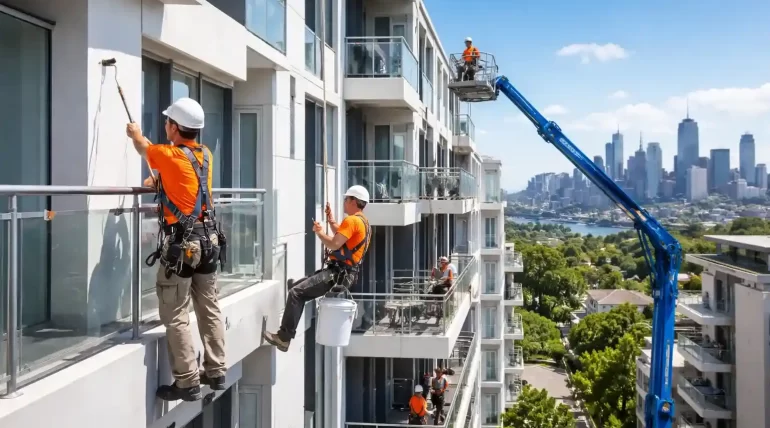
Imagine every stroke adding up to a crisp, even finish. The right tools (like this roller) and materials are key to a professional result.
Who Pays for What?
First, let’s be clear: the body corporate usually covers exterior and common-area painting, while individual owners handle inside their own units. In NSW, the owners corporation maintains shared walls, corridors, and external facades. (Tip: Always check your strata plan and the SCA “Who’s Responsible” guide – it’s free and handy for quick answers!) Expect the costs to come from the sinking (capital works) fund or special levies approved at a general meeting.
1. Check Credentials and Licences
You always want licensed, insured painters. In NSW, strata painters must hold a current Painting Contractor Licence plus insurance. A reputable team will have:
- NSW Painting Licence: Issued by NSW Fair Trading.
- $20M Public Liability Insurance: Protects your owners’ corp in case of accidents.
- Workers’ Compensation: Covers their crew.
- Safety Certifications: For scaffolding or high work (e.g. EWP tickets).
- Safe Work Method Statements (SWMS): Prepared for site risks.
Always ask to see the licence/insurance. It’s that simple. The NSW government even reminds strata owners to “check the supplier is qualified and/or licensed… and has the right insurance”. A phone call to Fair Trading or a quick online check can confirm licences. If the painters waffle or don’t have paperwork, move on.
Before engaging strata painters, committees should confirm whether the work falls under common property maintenance. The NSW Government explains strata repairs and maintenance responsibilities, helping owners corporations determine when licensed strata painters are required.
2. Look for Proven Strata Experience
Not all painters can handle a 20-storey apartment block! Seek specialists who have completed projects just like yours. Ask the painters to show you:
- Before-and-after photos or case studies of similar buildings.
- Testimonials from other strata committees.
- Examples of multi-unit projects: High-rise apartments, villa complexes, or commercial strata sites.
Experienced strata painters know the drill: they’ll plan safe access (EWPs, scaffolds, rope systems) and stage the work to minimize disruption. They’ll also notify residents when lifts or balconies are out-of-bounds. Higgins Coatings reports that “experienced strata painters understand the importance of communication, ensuring residents are notified of any impending works”. In short, the right team should be well-practiced at juggling colour swatches and resident expectations.
A shared hallway renovation in progress. Coordination with residents and landlords makes a big difference – just like this painter keeping spaces clean and quiet.
3. Compare Quotes – Don’t Shop on Price Alone
It’s tempting to pick the cheapest quote, but as they say in painting circles: you get what you pay for. One contractor’s low price may come from cutting prep work or materials. Instead:
- Get at least 3 quotes from different strata specialists.
- Make sure each quote covers the same scope: number of coats, types of paint, surface repairs, equipment hire.
- Compare apples to apples: Ask what’s included (prep work, primer, undercoat, etc) and what’s extra.
- Watch for vague quotes or huge differences. Higgins Coatings notes that “clear pricing” prevents surprises later.
You can even make a simple comparison table:
| Selection Tip | Why It Matters |
| Proven Strata Experience | They’ve handled buildings like yours |
| Valid Licences & Insurance | Mandatory in NSW; protects you |
| Transparent, Detailed Quote | Ensures all prep, materials, and labour are covered |
| Strong Communication | Keeps owners informed, limits disruptions |
| High-Quality Materials | Paints that survive Sydney’s sun, moisture |
Don’t just pick “cheap” – pick value. A well-prepped strata repaint can last 10–15 years, whereas a skimped job might need a redo in 5.
4. Communication & Management
Strata jobs involve many people, so clear communication is golden. Ask potential painters:
- Will they assign a dedicated project manager or site supervisor? (This person should update you, handle issues, and coordinate with the strata committee).
- How do they notify residents? (Emails, notices in lifts, meetings, etc. Good painters keep everyone in the loop.)
- Can they share regular progress reports or photos?
- Do they work around building schedules (quiet hours, peak times)? Higgins reminds us: “The best strata painters will have a project management process … keeping everyone informed at every stage”.
Don’t be shy about grilling them here – one satisfied body corporate member said of their painter: “We barely noticed the painters were there, everything was coordinated beautifully.” That’s the goal!
5. Verify Paint Systems & Quality
Sydney’s weather is no joke. You’ll want coatings built for your location. Ask what paints and processes they’ll use:
- UV-resistant & anti-fungal paints for coastal/high-sun areas.
- Anti-pollution coatings for inner-city facades to repel grime.
- Elastic membranes for concrete surfaces so cracks don’t reappear.
- Quality Brands: Dulux, Taubmans, Wattyl or similar, not bargain-bin specials.
- Green options: Low-VOC paints improve air quality indoors.
Painters Link reports using systems like Dulux Acratex which protect against UV and moisture – a must for bright Sydney summers. Using high-grade materials might cost a bit more now, but it saves in the long run. Cheap paint peels and fades fast; expensive paint can last a decade. As Higgins says, “the durability of your paint job largely depends on the workmanship and materials”.
6. Warranty & Aftercare
A pro company will stand behind their work with a written warranty. Typical strata paint warranties run 5–10 years on the paint itself. Key questions:
- What does the warranty cover? (just peeling, or also poor adhesion and prep?)
- Is there a workmanship warranty from the contractor?
- Do they offer any maintenance plan or annual inspection?
Make sure they provide it in writing. A top painter won’t hesitate to guarantee their prep, like Painters Link’s promise that safety and quality checks come at every step. If they seem evasive about warranties, that’s a red flag.
7. Check Reviews & References
Do a little detective work. Online reviews (Google, Facebook, productreview.com.au) give clues. Even better, ask for direct references:
- Speak to other strata committees or property managers who used them.
- Ask former clients: “Did they finish on time? How responsive were they? Any surprise issues?”
Higgins emphasizes using reviews and word-of-mouth. Direct referrals from fellow strata managers are gold.. If a painter can’t provide any real references, be wary. You want assurance they’ve done their homework and aren’t a one-time weekend warrior.
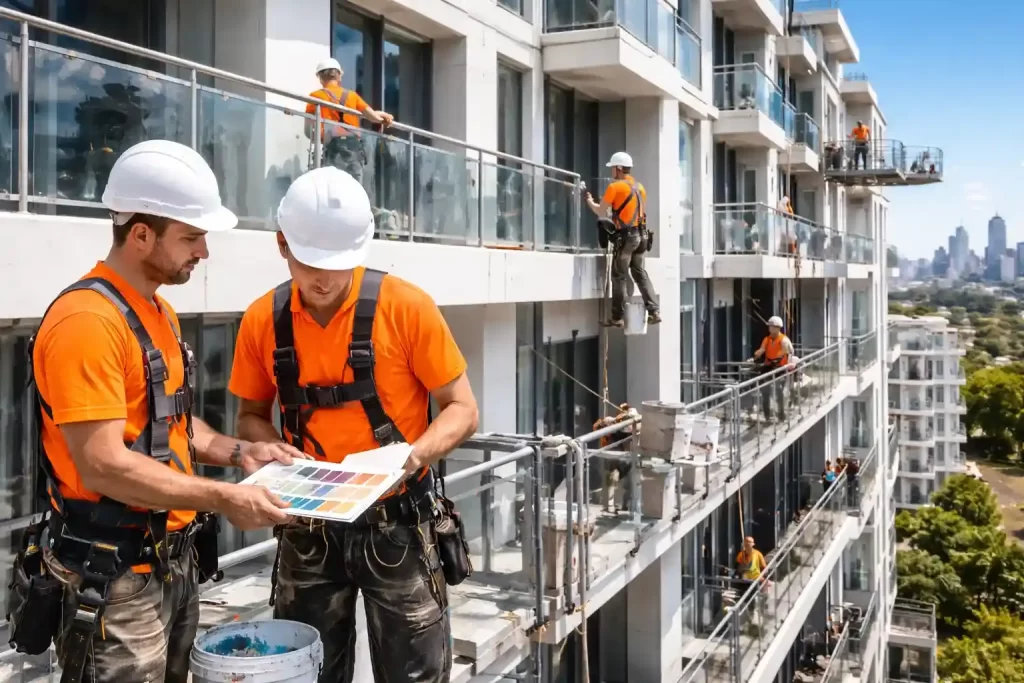
Exterior strata work in action. Proper equipment (scaffolds, lifts) and experienced crews keep projects safe and on schedule.
8. Accessibility & Scheduling
High-ups or tight lanes? Discuss access:
- Will they do a site inspection first? They should identify needs for scaffolding, boom lifts, or rope access.
- Can they work off-hours or in stages to avoid peak traffic? (Some strata painters offer nights/weekends).
- Noise and safety: Confirm they’ll minimise noise/dust and cordon areas.
Strata painting often happens around people’s routines. The right team will agree to a timeline that suits your building’s lifestyle. The Sydney guide on strata maintenance even advises letting owners know well in advance and sharing a clear timeline – make sure your painters follow that. (Hint: A professional team might split a job into phases so no single floor is locked down for too long.)
9. Get Everything in Writing
Once you’ve picked your painter, make sure the contract is crystal clear. It should detail:
- Scope of work (surfaces, number of coats, prep steps).
- Paint brands/types to be used.
- Project schedule and start/end dates.
- Total cost and payment schedule.
- Warranty terms.
- Safety and waste disposal plans.
- A clause about handling “by-law compliance” if you supply certain colours or materials.
Read the fine print for hidden costs or unfair terms. NSW strata law says any work over $30k needs at least two quotes, but even smaller jobs should have clear contracts. You might include a clause that they must clean up daily or fix any defects within a week. A good contract keeps everyone honest – it’s your last line of defense if anything goes awry.
Conclusion
Choosing the right strata painters in Sydney is all about due diligence. You’ll want experience, qualifications, clear communication, and top-notch materials. As NSW Fair Trading advises, “check the supplier is qualified and/or licensed… has the right insurance…”. With careful planning and the right questions, you can transform your strata building without the headaches.
So go ahead – gather those quotes, meet the painters, and pick the team that feels like a safe pair of hands. Your strata building (and your fellow owners) will thank you for years to come. And remember: for any doubts about strata responsibilities or painting rules, resources like the Strata Community Association’s “Who’s Responsible” guide can clarify common-property work【44†】. Happy painting!
If you’re planning a strata repaint and want to see how professional strata painters manage large-scale projects in Sydney, you can explore detailed examples of strata painting services in Sydney to understand typical scopes, timelines, and finishes.
FAQs
How often should a strata building be repainted?
Typically every 7–10 years, depending on factors like exposure, paint quality, and maintenance. Harsh sunlight and rain can necessitate more frequent touch-ups.
Who pays for strata painting?
The owners corporation does, usually using the sinking (capital works) fund or special levies. Individual owners pay only for paint work inside their own units.
Is a strata painter different from a normal house painter?
Yes. Strata painters specialize in large, multi-unit jobs. They handle safety for heights, coordinate with multiple owners, and know strata-specific regulations.
Do strata painters need a licence?
Absolutely. In NSW they must have a Painting Contractor Licence plus insurances. Always verify this before hiring to protect your strata.