
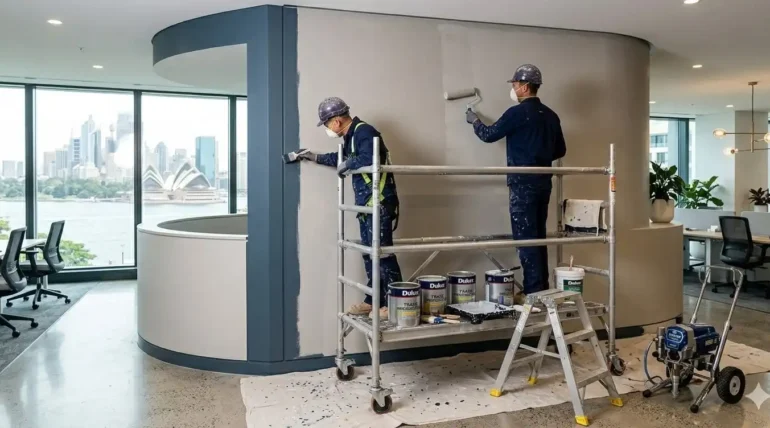
Running a business in Sydney already comes with enough moving parts. After Hours Commercial Painting Sydney lets you refresh your workplace without sending your staff, customers or daily operations into chaos.
That’s where After Hours Commercial Painting Sydney makes practical sense. You can refresh tired interiors, update your brand colours or give a commercial space a polished new look without putting your normal working day on hold.
What Is After Hours Commercial Painting?
After-hours commercial painting means completing painting work outside your business’s usual operating hours. Depending on your schedule, that could mean evenings, early mornings, weekends or public holidays.
I find this approach particularly useful for businesses that rely on a steady flow of customers or staff throughout the day. Think offices, retail stores, medical practices, restaurants, gyms, warehouses and professional facilities.
Instead of asking everyone to work around wet paint, ladders and drop sheets, you can let the painters work while the building is quiet. By the time your team arrives, the space can look completely different.
For businesses searching for a practical way to minimise disruption, After Hours Commercial Painting Sydney provides a convenient approach to keeping painting work separate from your busiest hours.
Why Choose After Hours Commercial Painting Sydney?
The biggest advantage comes down to less disruption.
Imagine running a busy Sydney office while painters move desks, cover equipment and work around employees. It’s possible, but it hardly creates the smoothest working environment. Someone will eventually ask, “Is that wall meant to be that colour?” while standing underneath a ladder.
With After Hours Commercial Painting Sydney, I can help businesses plan the work around their actual operating schedule.
Here are some of the key advantages:
- Minimal disruption: Your staff can continue working normally during business hours.
- Better access: Painters can reach walls, ceilings and high-traffic areas without people constantly moving around them.
- Faster progress: A quiet building often gives painters more room to work efficiently.
- Improved presentation: You can update tired spaces without closing your doors for several days.
- Better scheduling: Evening and weekend work can suit businesses with extended trading hours.
For many businesses, the real value isn’t simply getting fresh paint. It’s getting the job done while keeping normal operations moving.
Which Sydney Businesses Can Benefit?
Almost any commercial property can consider after-hours painting, although the ideal schedule depends on the building and the type of work involved.
Offices
Office painting often involves meeting rooms, reception areas, corridors, workspaces and breakout areas. Evening painting can allow employees to finish their day normally before the work begins.
Retail Stores
Retailers need their shops looking sharp, but closing during trading hours can affect customers and sales. After-hours work can help refresh walls, ceilings, feature areas and other surfaces without turning the shop into a construction zone.
Restaurants and Cafés
Hospitality businesses deal with their own scheduling challenges. Painting after closing can make sense because the space already becomes quieter once the last customer leaves.
Medical and Professional Practices
Medical centres, dental clinics and similar workplaces need to maintain a clean, professional environment. Careful scheduling can help reduce interference with appointments and staff routines.
Warehouses and Industrial Spaces
Large commercial facilities may need painting across walls, offices, staff areas, storage zones and other surfaces. Working outside standard operating periods can make access easier and safer.
Is After-Hours Painting Safe?
Yes, but I never treat timing alone as a safety strategy.
A professional painting plan should consider ventilation, access, lighting, equipment, surface preparation, paint products and the people who may enter the area afterwards.
Sydney businesses should also consider workplace health and safety requirements when planning painting work. SafeWork NSW highlights the importance of suitable workplace ventilation and controlling exposure to airborne contaminants, particularly where chemicals, fumes or vapours may be involved. SafeWork NSW workplace ventilation guidance
That means I wouldn’t simply say, “Let’s paint overnight and open the doors at 8 am.” I’d first consider the products being used, the size and layout of the space, ventilation requirements and the manufacturer’s instructions.
How Does After Hours Commercial Painting Work?
A well-organised project usually follows a straightforward process.
1. Assess the Commercial Space
First, I look at the areas you want painted, the existing surface condition, access points and your normal operating hours.
This assessment helps identify whether evening, overnight or weekend work makes the most sense.
2. Plan the Schedule
Next, I work around your business timetable.
For example, an office operating from 8 am to 5 pm might suit evening painting. A restaurant trading until midnight may need early-morning work instead.
The key is flexibility.
3. Prepare the Area
Good preparation often makes the difference between a finish that looks professionally done and one that looks like someone rushed it before sunrise.
I allow time for moving or protecting furniture, covering equipment, preparing surfaces, repairing minor imperfections and protecting floors.
4. Complete the Painting
Once everything is ready, the painting team can work through the agreed areas.
Depending on the size of the project, I may divide the property into sections. That can make it easier to manage access and return parts of the building to normal use.
5. Clean and Inspect
Painting doesn’t finish when the last roller leaves the wall.
I also allow time for cleaning, removing protective coverings, checking the finish and making sure the area is ready for normal use.
How Long Does Commercial Painting Take After Hours?
There isn’t one universal timeframe because every commercial property differs.
A small office refresh might require only a few sessions, while a large retail premises or warehouse could need considerably more time.
Several factors affect the schedule:
| Factor | How it affects the project |
| Property size | Larger areas require more preparation and painting time |
| Number of coats | Additional coats can extend the schedule |
| Surface condition | Repairs and preparation add time |
| Paint type | Different products have different drying requirements |
| Access | Restricted areas can slow movement and setup |
| Working hours | Shorter nightly shifts may require more sessions |
| Furniture and equipment | Protection and relocation can add preparation time |
I always recommend building a realistic schedule rather than trying to squeeze a major project into one heroic night.
How Can You Prepare Your Business?
A little preparation from your side can make the entire project smoother.
Before the painters arrive, I recommend:
- Clear unnecessary items from the painting areas.
- Secure valuable equipment and sensitive documents.
- Tell staff about the schedule so everyone knows which areas will be affected.
- Identify restricted areas such as server rooms, storage spaces or staff-only zones.
- Confirm access arrangements for evening or weekend work.
- Discuss ventilation and reopening requirements before work begins.
- Allow enough time for drying and inspection before employees or customers return.
You don’t need to turn your office into an empty shell. However, giving the painting team sensible access can save time and reduce unnecessary handling.
Choosing the Right Paint for a Commercial Space
Colour matters, but commercial painting involves more than choosing a shade from a colour chart.
I also consider how the space gets used.
A busy corridor, reception area or retail wall may experience considerably more contact than a quiet office. Similarly, areas exposed to moisture, cleaning or heavy traffic may require a suitable coating system.
You should also think about the atmosphere you want to create.
Soft neutral colours can make professional spaces feel clean and modern. Strong brand colours can create visual impact around reception desks or feature walls. Darker tones can add drama, while lighter shades can make smaller rooms feel more open.
The trick is knowing where to use each one.
After-Hours Painting vs Painting During Business Hours
Both approaches can work, but they create very different experiences.
| After-Hours Painting | Business-Hours Painting |
| Less interruption to staff | Work happens around employees |
| Easier access to empty areas | Furniture may need constant movement |
| Useful for customer-facing businesses | May suit businesses with flexible spaces |
| Can reduce daytime disruption | Often easier for daytime access |
| Requires careful scheduling | Requires stronger day-to-day coordination |
For businesses that depend heavily on uninterrupted daytime activity, after-hours work can provide a practical alternative.
However, I wouldn’t automatically recommend it for every project. Sometimes daytime painting makes more sense, especially when the property has limited lighting, ventilation or access outside normal hours.
Common Mistakes Businesses Should Avoid
I’ve seen businesses focus heavily on the colour and completely overlook the logistics.
That’s backwards.
Before choosing a colour, think about access, preparation, drying time, ventilation and when people need to use the space again.
Another common mistake involves underestimating preparation. Painting directly over damaged, dirty or poorly prepared surfaces rarely produces the polished finish you want.
Finally, don’t assume that “after hours” means “faster”. A professional project still needs enough time to prepare surfaces properly, apply the required coatings and complete the finishing work.
Speed has its place. Rushing a commercial paint job usually doesn’t.
How Much Does After Hours Commercial Painting Cost?
The cost depends on the individual project, so I wouldn’t rely on a generic per-square-metre figure without seeing the property.
The size of the area matters, but so do surface condition, access, preparation, number of coats, paint selection, working hours and the complexity of the building.
After-hours work can also involve additional scheduling considerations because painters may need to work outside standard hours.
Instead of choosing a contractor based only on the cheapest quote, look at the complete scope of work.
Ask:
- What preparation does the quote include?
- How many coats will the painter apply?
- Which areas will the team cover?
- How will furniture and equipment be protected?
- What cleaning is included?
- When can staff safely return?
- Does the schedule realistically suit the business?
A clear scope gives you a much better basis for comparing quotes.
How to Plan an After-Hours Painting Project
If you’re considering After Hours Commercial Painting Sydney, I’d start with a simple checklist.
First, identify the problem. Are the walls simply looking tired, or do you need a complete commercial makeover?
Next, identify the affected areas. You may not need to paint every room at once.
Then, choose your working window. Decide whether evenings, weekends or early mornings create the least disruption.
After that, prepare the site. Move what needs moving and protect anything that stays.
Finally, build in breathing room. Don’t schedule employees to return five minutes after the painters finish. Give the project enough time for final checks, drying and ventilation requirements.
That extra breathing room can make the difference between a smooth reopening and a very awkward Monday morning.
Why Professional Planning Matters
Commercial painting looks straightforward until you have to coordinate it around real people, real furniture, real deadlines and a real business.
That’s why I see planning as just as important as the paint itself.
A professional approach considers the building, the surfaces, the working environment and your operating schedule before the first brush touches the wall.
When everything lines up, your staff can finish work, the painters can get started, and your business can wake up to a noticeably fresher space.
Final Thoughts on After Hours Commercial Painting Sydney
A commercial painting project doesn’t have to mean shutting down your business or asking customers to navigate around ladders and drop sheets.
With After Hours Commercial Painting Sydney, you can plan the work around your business rather than forcing your business to work around the painters.
The right approach starts with proper preparation, realistic scheduling, suitable products and attention to workplace conditions. From a small office refresh to a larger commercial makeover, thoughtful planning keeps the project organised from start to finish.
If your Sydney business needs a fresh, professional look without unnecessary daytime disruption, now is a good time to plan the project. Get in touch with our team to discuss your commercial painting requirements and find a schedule that works for your business.
Frequently Asked Questions
What is after-hours commercial painting?
After-hours commercial painting involves completing painting work outside a business’s normal operating hours. This can include evenings, weekends or early mornings.
Is after-hours painting suitable for offices?
Yes. Office painting can work particularly well after hours because painters can access workspaces, meeting rooms and corridors without interrupting employees.
Can a business stay open while painters work after hours?
Yes, provided the work is properly scheduled and the affected areas remain appropriately controlled. Businesses should consider access, ventilation, drying requirements and workplace safety before reopening.
How long does commercial painting take?
The timeframe depends on the size of the property, surface condition, preparation requirements, number of coats, paint products and available working hours.
Can commercial painters work overnight?
Overnight work may be possible depending on the property, project requirements, access arrangements and safety considerations. A professional assessment should determine whether overnight painting is suitable.
What should I do before commercial painters arrive?
Clear unnecessary items, protect sensitive equipment, communicate the schedule with staff and make sure the painting team has suitable access to the required areas.
Is after-hours commercial painting more expensive?
It can involve additional scheduling considerations, but the overall cost depends on the project rather than simply the working hours. The best approach is to request a detailed quote based on your property and requirements.
What areas can commercial painters work on?
Commercial painters can work on areas such as offices, reception spaces, retail interiors, corridors, warehouses, ceilings, feature walls and other suitable commercial surfaces, depending on the project.
Can I repaint only part of my commercial property?
Absolutely. You can prioritise high-traffic areas, customer-facing spaces, reception zones or rooms that need the most attention. A staged approach can also make larger projects easier to manage.